008613968780263


Choosing the right heating equipment for an international project involves more than comparing purchase prices. A Metal Radiator must perform reliably across different climates, water qualities, installation practices, and building standards. Steel and aluminum models can offer strong thermal transfer, stable dimensions, and practical design flexibility. Their suitability depends on engineering details, not appearance alone.
John Siegenthaler, P.E., a respected hydronic-heating engineer, states, “A radiator’s performance cannot be separated from the system around it.” This principle matters during global procurement. Flow temperature, pipe sizing, valve selection, pressure limits, and control strategies can change actual heat output. A radiator tested at 75/65/20°C may perform differently in a low-temperature heat-pump system. That difference should appear in the design documents.
Metal Radiator choices can also simplify project coordination. Steel panels are widely available, easy to specify, and suitable for standardized room layouts. Aluminum sections may reduce weight and support faster handling on upper floors. Protective coatings help in humid environments, but they cannot replace proper water treatment or corrosion control. Small details matter. A damaged coating can become a maintenance issue.
Experience still exposes uncomfortable gaps. Product data is sometimes difficult to compare between manufacturers. Certification marks may reflect different testing methods. Logistics can also weaken an otherwise excellent specification. For dependable results, project teams should verify thermal tests, material thickness, warranty terms, spare-part access, and local compliance before ordering. No Metal Radiator is universally perfect. The best choice balances engineering evidence, installation reality, lifecycle cost, and the building’s actual operating conditions.
Why Choose a Metal Radiator for Global Projects?
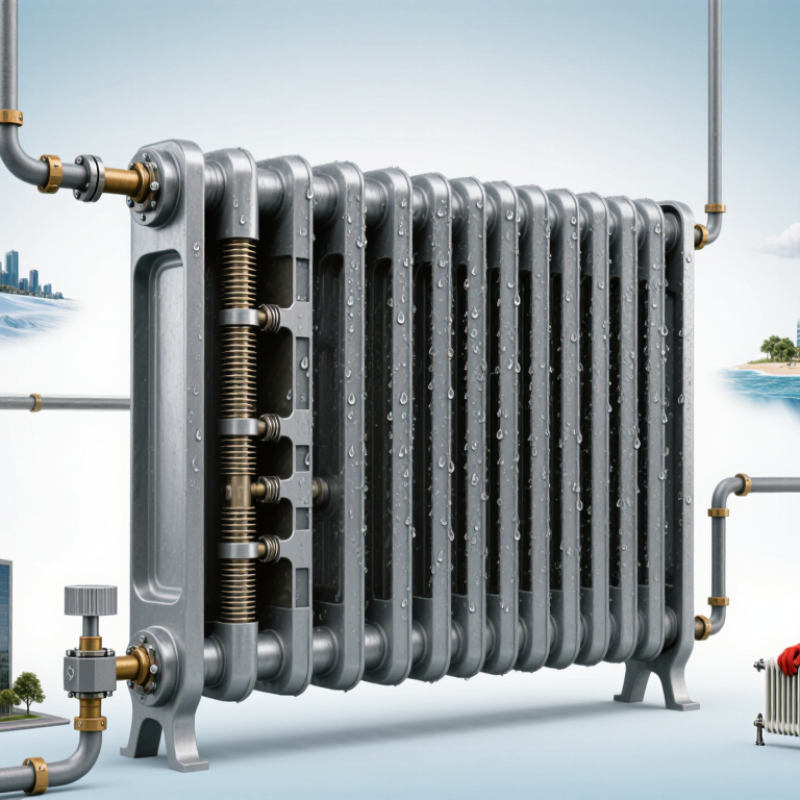
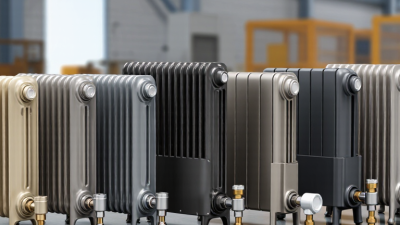
A metal radiator is a heat-emitting appliance made mainly from steel, aluminum, or cast iron. It transfers heat from hot water, steam, or an electrical element into a room. Steel panels are common because they balance strength, cost, and manufacturability. Aluminum sections react quickly to temperature changes. Cast iron retains heat longer, but it is heavier and slower to install. In practice, the metal is only part of the system. Water temperature, radiator size, insulation, and control valves shape real performance. The choice should follow the building, not a catalog photograph.
For global projects, engineers compare output under EN 442 test conditions. This creates a shared reference for sizing and specification. It does not predict every occupied room. The International Energy Agency reported in 2023 that buildings used about 30% of global final energy and produced roughly 26% of energy-related emissions. The UNEP 2023 Global Status Report also identifies buildings as a major energy and emissions sector. Efficient heat distribution therefore matters beyond comfort. Yet metal is not automatically efficient. An oversized unit can cycle poorly, while an undersized one leaves a room cold. That mistake still appears in real projects.
Field experience adds less visible details. In coastal locations, protective coatings and drainage deserve early review. In remote sites, weight, packaging, spare parts, and local installation skills can determine success. Aluminum may reduce handling effort, while cast iron may suit buildings needing steady heat. Neither option wins everywhere. Specifications should state operating pressure, test method, corrosion protection, and expected water quality. I would also question vague claims such as “high efficiency.” Efficiency belongs to the complete heating system, not the metal body alone.
Why Choose a Metal Radiator for Global Projects?
Metal radiators move heat through conduction, convection, and radiation. Hot water warms the metal core first. The core then releases heat into the room. Aluminum transfers heat quickly, with conductivity near 205 W/m·K. Steel offers slower transfer but stronger structural durability. Cast iron stores more heat because its mass is greater.
Retention matters in changing climates. A heavier radiator can remain warm after the boiler cycles off. This reduces sudden temperature swings near windows, desks, and tiled floors. However, metal is not automatically efficient. Poor sizing, trapped air, or low water flow can waste its advantages. The International Energy Agency reported that buildings used about 30% of global final energy in 2022. Heating remains a major part of that demand. Correct heat output is therefore more important than appearance alone.
Tips: Match radiator output with the room’s calculated heat loss. Check the operating temperature, pipe layout, and local climate data. Use thermostatic controls where occupants need different comfort levels. A compact aluminum unit may respond quickly. A heavier steel or cast-iron unit may feel steadier. This trade-off needs testing. The best design can still fail when installation details are overlooked. References include the IEA Buildings report and ASHRAE Handbook—Fundamentals.
How Metal Radiators Transfer and Retain Heat
Thermal conductivity indicates how quickly heat moves through the material, while volumetric heat capacity indicates how much heat the material can store per degree of temperature rise. Values shown are typical room-temperature reference values and may vary by alloy, grade, and manufacturing process.
Metal selection strongly influences a radiator’s weight, heat response, durability, and installation requirements. No metal wins every project.
Steel remains common in panel and tubular radiators. It offers good strength, predictable manufacturing, and competitive transport costs. Its welded joints can withstand demanding commercial use when properly designed and tested. However, untreated steel may corrode when moisture, oxygen, or poor water chemistry remains inside the system.
Aluminum is lighter than steel and transfers heat quickly. This can help reduce wall loads and shorten warm-up times. It is useful for modular sections and projects with difficult access. Yet aluminum requires careful attention to water treatment and connections with other metals. Galvanic corrosion is easy to overlook.
Copper conducts heat efficiently and appears in compact tubes and heat exchangers. Brass is often used for valves, fittings, and threaded components because it machines well and resists many service conditions. Cast iron provides excellent thermal stability and a long service life, but its weight increases handling and structural demands.
Project teams should compare operating temperature, water quality, pressure, humidity, and local standards before choosing a metal. A coastal building may need stronger corrosion protection than a dry inland facility. Material data sheets are useful, but installation details matter just as much. Small errors at joints can defeat excellent metal selection. The practical choice is sometimes less elegant, but more reliable.
Why Choose a Metal Radiator for Global Projects?
Metal radiators suit global projects because they balance heat output, durability, and practical installation. Steel models provide stable performance in offices, apartments, schools, and healthcare facilities. Aluminum options are lighter, which can reduce handling effort on upper floors and remote sites. That matters.
Project conditions vary sharply across regions. A radiator near a humid coastline needs suitable corrosion protection. A unit in a cold warehouse needs dependable operation during repeated temperature changes. Engineers should check water quality, operating pressure, local temperatures, and connection standards before approval. Guesswork creates expensive delays.
Metal radiators also support efficient logistics. Their standard shapes can simplify packaging, storage, and replacement planning. Robust surfaces tolerate normal transport better than fragile materials, although poor handling can still cause dents or coating damage. I have seen specifications focus heavily on heat output while ignoring wall strength and installer access. That is a mistake. Mounting brackets, valve positions, pipe routes, and cleaning space deserve equal attention.
Reliable performance depends on correct sizing and commissioning. A radiator that looks powerful may underperform in a poorly insulated room. Local building codes and energy requirements must guide the final selection. Independent testing, clear documentation, and qualified installation improve confidence across international teams. Small differences in water systems can matter.
| Project Requirement | Relevant Metal-Radiator Characteristic | Typical Data or Range | Global Project Benefit |
|---|---|---|---|
| Heat-transfer performance | Metal provides a conductive path from the water channel to the radiator surface. | Approximate thermal conductivity: aluminum 205–235 W/m·K; steel 45–60 W/m·K; cast iron 40–55 W/m·K; copper 385–400 W/m·K. | Supports predictable heat output when radiator size, water temperature and airflow are correctly selected. |
| Compatibility with hydronic systems | Metal radiators are commonly designed for closed-loop hot-water heating systems. | Typical design water-temperature ranges include approximately 45–75°C, depending on the building and heat-source design. | Suitable for conventional boilers, district heating interfaces, heat pumps and mixed-temperature systems when correctly specified. |
| Pressure and temperature verification | Metal construction allows controlled manufacturing of pressure-bearing water channels. | Actual limits vary by design; project specifications should state maximum working pressure, test pressure and maximum operating temperature. | Makes it easier to align product selection with local hydraulic calculations, safety requirements and system commissioning procedures. |
| Response speed | Low-mass aluminum panels generally heat up faster than high-mass cast-iron radiators. | Relative response depends on mass, water volume, surface area, control valve and system flow rate. | Allows designers to match radiator behavior with occupancy schedules, zoning controls and energy-management systems. |
| Weight and handling | Aluminum is significantly lighter than steel or cast iron. | Material density is approximately: aluminum 2,700 kg/m³; steel 7,850 kg/m³; cast iron about 7,100–7,300 kg/m³. | Can reduce manual-handling demands, installation time and structural loading, subject to the complete radiator assembly weight. |
| Corrosion management | Corrosion resistance depends on the metal, water chemistry, coatings, oxygen exposure and contact with dissimilar metals. | Closed-loop systems should be designed with suitable pH control, inhibitor strategy, air removal and water-quality monitoring. | Provides a clear basis for adapting specifications to humid, coastal, hard-water or chemically aggressive environments. |
| Long-term durability | Metal radiators are resistant to normal indoor temperature cycling when correctly manufactured, installed and maintained. | Expected service life is project-dependent and influenced by water quality, coating integrity, mechanical damage and operating conditions. | Supports lifecycle planning for residential, commercial, institutional and infrastructure projects. |
| Manufacturing consistency | Steel and aluminum radiator components can be produced using repeatable forming, welding, extrusion or casting processes. | Dimensional tolerances and weld quality should be verified through the applicable production-control documentation. | Helps maintain consistent installation dimensions across multiple buildings and countries. |
| Standards and testing | Radiator performance can be tested and declared using recognized national or international methods. | Common references include EN 442 for radiator and convector thermal output, ISO 9001 for quality-management systems, and ISO 9227 for salt-spray testing of metallic coatings. | Simplifies technical comparison, tender evaluation and approval across different regulatory markets. |
| Recyclability | Steel, aluminum, copper and cast iron can be recovered and recycled through established metal-recycling streams. | Recycling rates and recycled content vary by region, alloy, coating, collection system and separation method. | Supports circular-economy objectives and end-of-life material recovery when dismantling is planned. |
| Transport and logistics | Metal radiators can be supplied in standardized sizes and packaged for palletized transport. | Logistics performance depends on unit weight, packaging dimensions, stackability and protection against coating damage. | Facilitates shipment planning for projects with multiple delivery locations and phased construction schedules. |
| Design flexibility | Metal can be formed into panel, tubular, column, sectional, trench and specialist radiator configurations. | Available dimensions, connection positions, surface finishes and heat outputs must be confirmed for each project. | Adapts to different room layouts, window dimensions, architectural styles and local installation practices. |
| Maintenance requirements | Routine care generally includes cleaning, air removal, valve inspection and checking for leaks or coating damage. | Maintenance frequency depends on dust levels, humidity, water chemistry, system pressure and operating hours. | Provides a familiar maintenance approach for facility teams in different regions. |
Note: Values shown are general engineering ranges for comparison only. Final radiator selection should be based on verified heat-loss calculations, operating conditions, applicable local regulations and documented product testing.
Why Choose a Metal Radiator for Global Projects?
How to Select a Metal Radiator for Different Climates and Buildings
Climate should guide the radiator choice, not just room size. In cold, dry regions, steel or cast iron models can provide steady heat through long winter nights. Cast iron responds slowly, but its thermal mass helps reduce sudden temperature changes. Aluminum radiators heat quickly and suit buildings with intermittent heating schedules.
Humid coastal areas need stronger corrosion protection. Check the metal finish, internal coating, and water quality requirements before ordering. Salt carried through open windows can damage weak surfaces over time. In tropical buildings, radiators may serve bathrooms, entrance halls, or occasional cool-season heating. Compact aluminum units can work well when fast response matters. They may feel less forgiving if the system controls are poorly adjusted.
Building structure also changes the decision. Older masonry walls often lose heat quickly and may need higher output. New insulated buildings usually require smaller units and accurate thermostatic control. Measure heat loss rather than copying a nearby project. Follow recognized performance data, such as EN 442 where applicable, and confirm local pressure and safety rules. Water-based systems also need compatible valves and reliable air removal.
Small details matter.
Site experience shows that installation conditions are often underestimated. Narrow corridors, uneven walls, and limited lifting access can affect the final selection. A beautiful radiator may fail practically if technicians cannot service it. We should also question standard assumptions: climate zones are not uniform, and user habits can change heating demand. Consult local engineers before approving the final specification.