Best HDMI Interface for Optimal Performance in 2026?
In the ever-evolving world of technology, the HDMI interface remains crucial for high-quality video and audio transmission. As we look ahead to 2026, understanding the best HDMI interfaces is essential for maximizing performance. Recent advancements introduce new standards that enhance user experience, such as improved bandwidth and support for higher resolutions.
Choosing the right HDMI interface can be daunting. Various options exist, each with specific features that suit different needs. For gamers, a fast refresh rate is key. For cinephiles, 4K support is essential. However, many users may overlook compatibility issues, which can lead to frustrating experiences.
Ensuring an optimal setup often involves trial and error. Users should consider their devices and intended usage before selecting an HDMI interface. The journey toward the best connection is not always straightforward. With careful consideration and research, finding the right HDMI interface can greatly enhance your multimedia experience in 2026.
Evolution of HDMI Technology: Key Developments Leading to 2026
The evolution of HDMI technology has been remarkable over the past few years. As we approach 2026, several key developments shape its trajectory. HDMI 2.1, introduced in 2017, significantly increased bandwidth to 48 Gbps, allowing for higher resolutions and refresh rates. This was a game changer for high-definition content and gaming experiences.
However, there are still challenges to address. While many devices support HDMI 2.1, not all consumers have access to compatible displays. According to industry reports, only about 30% of TVs sold in 2023 supported HDMI 2.1 features fully. This discrepancy could hinder optimal user experiences as content becomes increasingly demanding. Additionally, cables must maintain signal integrity at higher resolutions, leading to quality concerns.
Looking ahead, the HDMI Forum is already discussing HDMI 2.2. Anticipated advancements may include even higher bandwidth and support for additional color spaces. Yet, the transition may not be smooth. The industry must consider compatibility issues and user education. As technology evolves, ensuring seamless integration will be crucial for maximizing potential performance.
Understanding HDMI Versions: Features and Capabilities Explained
HDMI technology has evolved significantly, with various versions offering distinct features and capabilities.
The latest innovations focus on achieving higher resolutions and improved bandwidth.
As of 2023, HDMI 2.1 supports up to 10K resolution at 120Hz, while also including Dynamic HDR, eARC, and Variable Refresh Rate (VRR).
These enhancements promise a richer visual experience, especially for gamers and home theater enthusiasts.
When considering the most effective HDMI interface for optimal performance in 2026, it’s crucial to understand these advancements.
HDMI 2.1 allows for seamless interaction between devices, ensuring that high-quality audio and visuals do not suffer from lag or syncing issues.
Industry reports predict that by mid-2026, over 60% of TVs sold will support HDMI 2.1, making it a standard for new devices.
Tips:
Ensure your cables are certified for the latest HDMI version. Low-quality cables can hinder performance. Check the specifications of your devices to maximize capabilities. This will help you avoid compatibility issues as new standards emerge. Also, reconsider investments in older HDMI versions, as they may not support future advancements. Adapting to newer technology can save you from repeated upgrades.
Assessing Bandwidth Requirements for 4K, 8K, and Beyond
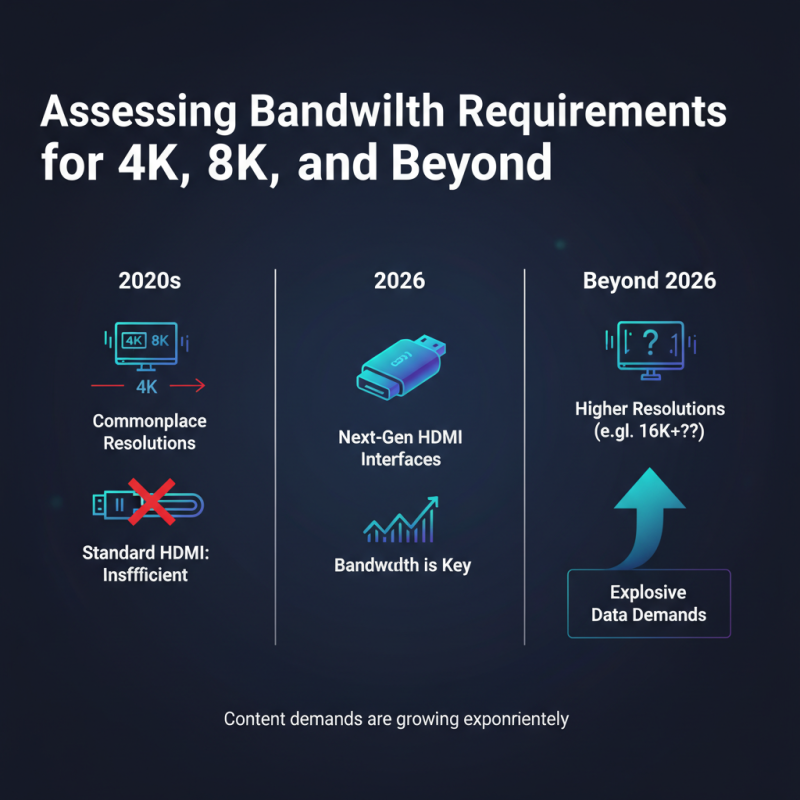
When considering HDMI interfaces for 2026, bandwidth is a key factor. The demands for content are growing. 4K and 8K resolutions have become commonplace. As we move toward even higher resolutions, the requirements increase. Standard HDMI cables cannot handle these needs effectively.
For 4K streaming, HDMI 2.0 is typically sufficient, offering up to 18 Gbps bandwidth. But for 8K content, the latest standards are essential. HDMI 2.1 supports up to 48 Gbps, which accommodates higher frame rates and more detailed visuals. Users must ensure their cables are compatible with these advancements. Not paying attention could result in subpar performance.
Future-proofing technology is wise. However, it's crucial to assess actual needs. Not everyone needs 8K right now. A focus on future standards might lead us to overlook availability and content. Balancing current capabilities with future demands is essential for users. Investing in high-quality HDMI solutions today can pay off in the long run. But it’s important to consider personal usage habits before making decisions.
Compatibility and Connectivity: Choosing the Right HDMI Cables
Choosing the right HDMI cables is crucial for optimal performance in 2026. You’ll find various options on the market, but not all cables are created equal. Look for cables with higher bandwidth capabilities. This ensures they can handle 8K video and improved audio formats. A cable with these specifications can elevate your viewing experience.
Compatibility is another key factor. Check your devices to see which HDMI version they support. Older devices may not fully utilize advanced features found in newer HDMI standards. It’s essential to strike a balance between future-proofing and current needs. Ensure that the length of the cable suits your setup too. Longer cables can lead to signal degradation.
Testing cables before making a purchase is worthwhile. Not all cables deliver the same performance, even if they share specifications. Pay attention to the materials used in the construction. Poor quality connectors can lead to reliability issues. Always seek cables that provide reliable performance to avoid frustration during critical moments.
Best HDMI Interface Performance in 2026
Future Trends and Innovations in HDMI Interfaces for Optimal Performance
The future of HDMI interfaces looks promising. As technology evolves, so do the demands for faster and more efficient connections. In 2026, we may witness significant innovations that enhance performance and support higher resolutions and refresh rates.
One key trend is the adoption of HDMI 2.1 and beyond. This version supports 8K at 60Hz and 4K at 120Hz, providing users with optimal visual experiences. The bandwidth increases significantly with these new versions. However, compatibility with older devices might still pose challenges for some users.
Tips: Ensure your devices are updated to utilize the latest HDMI standards. Look for cables rated for higher bandwidths to fully enjoy the advancements. Additionally, consider the distance between your devices; longer cables may require active solutions for maintaining signal quality.
Another exciting innovation is the rise of wireless HDMI technologies. These solutions aim to eliminate messy cables, making setups cleaner and more versatile. Yet, users should be careful of potential latency issues. The quality of wireless connections can be inconsistent, and that could impact overall performance.
Tips: Test wireless setups in different environments to gauge performance. Keep obstacles to a minimum for better signal clarity. Being aware of environmental factors can improve your experience.
 008613968780263

 CONTACT NUMBER
 CONTACT