Top 10 Tips for Choosing the Best Fiber Optic Connector?
In the rapidly evolving world of telecommunications, choosing the right Fiber Optic Connector is crucial. Expert Linda Harris, a renowned figure in fiber optics, once stated, “Selecting the right connector can make or break your network performance.” This highlights the importance of informed decision-making in this industry.
With various options available, understanding your specific needs is vital. Different connectors serve distinct functions. Some are better for high-speed data transmission, while others excel in durability. The right choice can enhance signal integrity and reduce downtime.
However, many users overlook essential factors when selecting a Fiber Optic Connector. Some might choose based on price alone, neglecting quality. This can lead to higher maintenance costs over time. Exploring various connectors can help you avoid potential pitfalls and ensure a reliable network setup.
Understanding Different Types of Fiber Optic Connectors Available in the Market
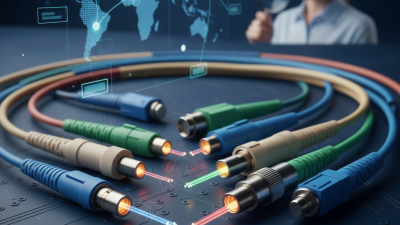
When it comes to fiber optic connectors, knowledge is key. Different types cater to various applications, affecting performance and reliability. Common types include SC, LC, ST, and MTP/MPO connectors. Each has unique features suited for specific environments. Understanding these connectors can significantly impact your network's performance.
When selecting a connector, consider the environment where it will be used. For high-density applications, MTP/MPO connectors offer a compact solution. SC and LC connectors are widely used due to their ease of installation and efficiency. Ensure that the connector type matches the fiber type, whether single-mode or multi-mode, to avoid compatibility issues.
A critical tip for choosing a connector is to assess the operation's future needs. Consider potential network growth and new technologies. Durability is also essential; some connectors may not withstand extreme conditions. Think about the long-term costs and maintenance they might require. It would be wise to review multiple options before making a decision. Don't rush the process; sometimes, taking time to evaluate leads to better choices.
Top 10 Tips for Choosing the Best Fiber Optic Connector
| Tip Number |
Tip Description |
Connector Type |
Best Use Case |
| 1 |
Assess your application needs |
LC Connector |
High-density applications |
| 2 |
Consider connector compatibility |
SC Connector |
Standard telecom and datacom applications |
| 3 |
Evaluate the cost of connectors |
ST Connector |
Legacy systems |
| 4 |
Examine installation process |
MTP/MPO Connector |
Multifiber applications |
| 5 |
Review environmental factors |
FC Connector |
High-vibration environments |
| 6 |
Analyze future scalability |
E2000 Connector |
High-speed networks |
| 7 |
Check for polish type |
PC, UPC, and APC connectors |
Variety of applications depending on reflection needs |
| 8 |
Determine fiber type compatibility |
Single-mode and multimode connectors |
Specific to fiber type used |
| 9 |
Seek industry certifications |
ISO/IEC compliant connectors |
Assurance of quality standards |
| 10 |
Focus on strain relief options |
Ferrule design |
Durability in installations |
Evaluating Connector Performance: Losses, Durability, and Environmental Factors
Choosing the right fiber optic connector goes beyond mere specifications. Evaluating connector performance is crucial. Focus on three main factors: losses, durability, and environmental resistance.
Losses impact signal quality. Look for connectors designed to minimize insertion loss and return loss. A low insertion loss ensures efficient signal transmission over long distances. Seek connectors promising consistent performance across various applications. High return loss indicates better reflection handling, crucial for optimal data integrity.
Durability is another vital aspect. Connectors should withstand wear and tear, particularly in active environments. Consider those constructed from robust materials that resist physical damage. Environmental factors also matter. Connectors must perform well under extreme temperatures and humidity. Ensure they can operate reliably outdoors or in harsh indoor settings. Always reflect on how these factors affect your choice, as they can significantly influence overall network reliability and performance in real-world scenarios.
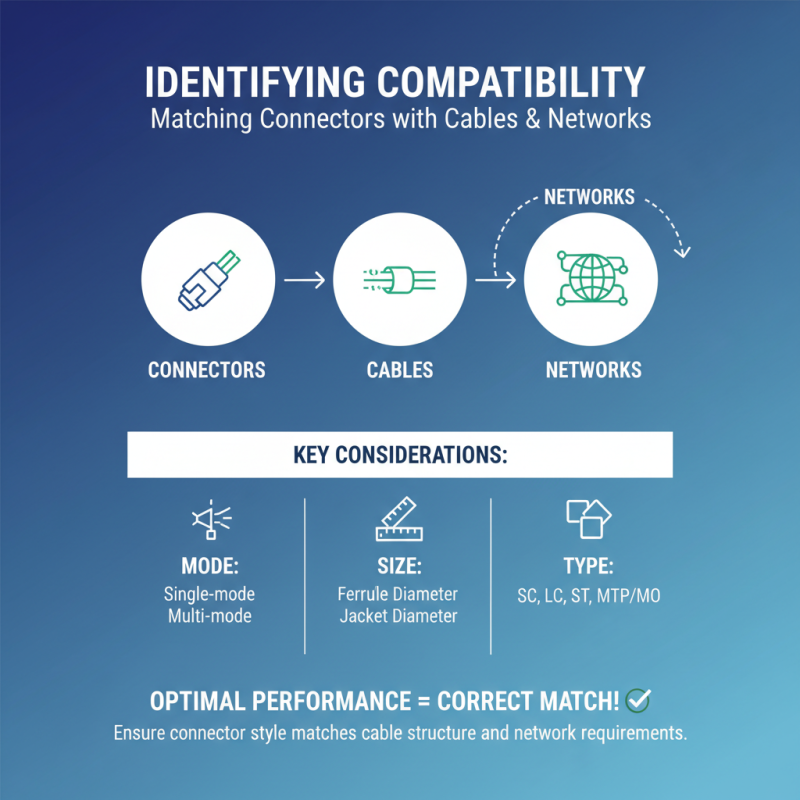
Identifying Compatibility: Matching Connectors with Cables and Networks
When choosing fiber optic connectors, compatibility is crucial. Connectors must match not only the cables used but also the network's requirements. Understanding specifications like mode, size, and type of fiber is essential. Common types include SC, LC, and ST connectors. For optimal performance, ensure the connector style matches the cable structure—single-mode or multi-mode.
Before making a decision, check the specifications of both connectors and cables. Mismatched components can lead to performance issues, including signal loss. Look for detailed product descriptions that clarify compatibility. Some connectors may look similar but serve different functions, leading to confusion. The consequences of a poor choice can be significant.
Testing is vital. If possible, test the connectors before a large-scale installation. This step can reveal unforeseen issues with fit or performance. Ensuring a snug fit between connectors and cables can prevent potential network disruptions. Pay attention to factors like installation environment, as these may influence the choice of connectors. A thoughtful approach will save time and costs in the long run.
Considering Installation and Maintenance Ease for Fiber Optic Connectors
When selecting fiber optic connectors, considering installation and maintenance ease is crucial. A recent industry report highlights that improper installation can lead to a 30% increase in system downtime. This emphasizes the need for user-friendly connectors. A design with fewer components can simplify the installation process. Connectors that allow for tool-free assembly can save significant time.
Moreover, maintenance is often overlooked. According to a study, up to 50% of network issues stem from poorly maintained connections. Ease of access for routine checks is essential. For instance, push-pull connectors provide convenient access compared to traditional connectors. This facilitates faster troubleshooting, reducing the overall operational cost.
Even with these advantages, one must reflect on the potential pitfalls. Some users may find simpler designs to be less durable in harsh environments. A balance is needed between ease of installation and long-term reliability. Investing in high-quality connectors is not just about immediate ease. It requires a long-term consideration of performance and maintenance implications.
Assessing Cost vs. Quality: Finding Value in Fiber Optic Connector Selection
When choosing a fiber optic connector, balancing cost and quality is crucial. Many users face pressure to save money. However, low-cost connectors can lead to poor performance. Inadequate products may result in signal loss and increased network downtime. This is a costly mistake in the long run, as fixing these issues often requires higher expenses.
Quality connectors enhance performance and longevity. They can withstand various environmental conditions, reducing the need for repairs. Consider factors like durability and material. Sometimes, more expensive options are worth the investment. They provide robust solutions that prevent future problems. Research reputable sources to understand what specifications truly matter.
Buyers often overlook the importance of compatibility and reliability. A cheaper connector might fit your current system, but what about future upgrades? Make a list of your needs and analyze the trade-offs. Investing in a connector with proven performance is often wise. Reflect on any past decisions that led to increased costs. A thoughtful approach will save time and resources later.
 008613968780263

 CONTACT NUMBER
 CONTACT