008613968780263

Leave Your Message
-
CONTACT NUMBER
-
 CONTACT NUMBER
 -
 CONTACT
Choosing the right Die Casting Heat Sink supplier can shape an electronics product’s thermal performance, cost, and service life. The decision reaches beyond price. Alloy selection, mold precision, porosity control, surface treatment, and delivery consistency all matter.
Professor Diran Apelian, a respected materials and die-casting researcher, offers a useful principle: “Process control turns material potential into reliable performance.” That idea guides this international review. A capable supplier should demonstrate stable thermal conductivity, thin-wall capability, dimensional accuracy, and repeatable production records. Factory photographs help, but verified test data matters more. Ask for conductivity reports, pressure-test results, and sample inspection records.
The ten suppliers examined here serve different markets. Some specialize in compact LED housings. Others support automotive inverters, telecom equipment, or high-density server systems. Their strengths are not identical. One may provide excellent tooling support but limited regional logistics. Another may offer attractive pricing but weaker documentation. That difference deserves attention.
A real-world heat sink is not merely a metal shape. It may include delicate fins, threaded mounting points, protective coatings, and uneven heat loads. Small defects can create hot spots near power modules. Sometimes, the “best” supplier depends on production volume and redesign flexibility. That is easy to overlook.
This guide compares technical capability, manufacturing experience, quality systems, customization, lead times, and customer support. It cannot replace an on-site audit or engineering validation. Supplier claims should be checked carefully. Even this ranking may change as facilities, equipment, and markets evolve.
Definition and Role of Die Casting Heat Sinks
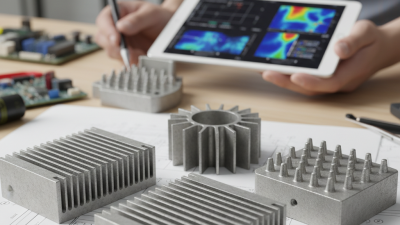
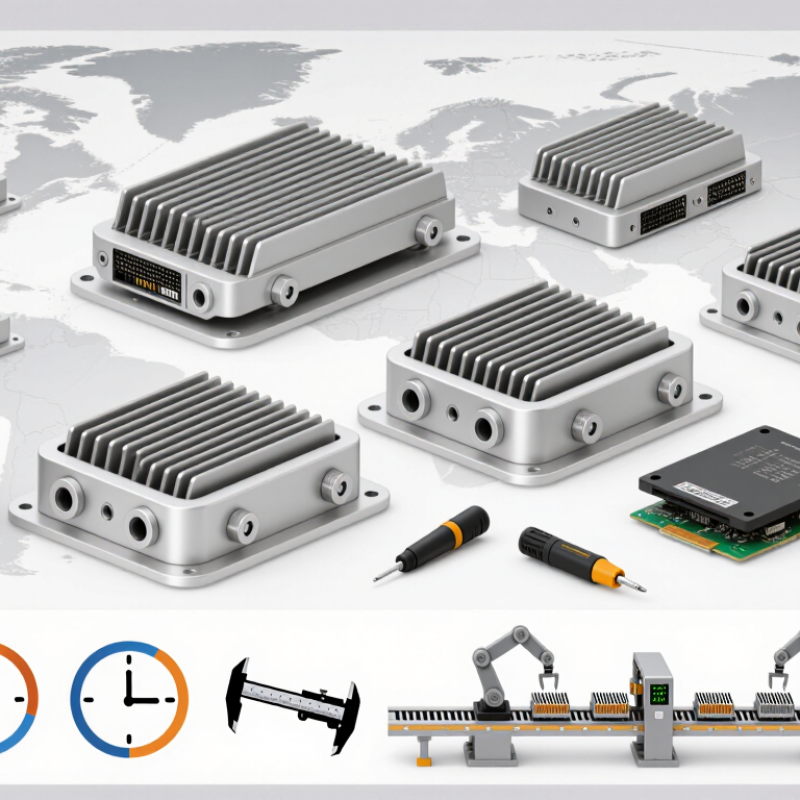
A die casting heat sink is a metal component that removes heat from electronic devices. It is commonly produced by forcing molten aluminum into a precision mold. This method creates thin fins, mounting points, and complex shapes in one operation. The finished structure transfers heat from a semiconductor to surrounding air. Its role is simple but essential. It helps control operating temperature, reduce thermal stress, and support stable equipment performance. A heat sink can look adequate and still underperform when airflow, contact pressure, or surface finish is ignored.
In practical engineering, designers assess thermal resistance, fin spacing, material thickness, and installation direction. Aluminum alloys are often selected for their balance of conductivity, weight, strength, and casting efficiency. Reliable evaluation should include temperature testing under realistic electrical loads. Engineers should also check for porosity, distortion, and uneven contact surfaces. These details can weaken heat transfer. No design is perfect. A small change in fan speed or ambient temperature may alter the result significantly.
Tips: Keep the thermal interface clean and evenly compressed. Avoid placing fins too close together. Verify airflow inside the final enclosure, not only on a test bench. Allow reasonable safety margins, because laboratory conditions rarely match daily operation.
Supplier capability benchmark and technical guide for selecting die-cast heat sink manufacturing partners
| No. | Supplier Capability Profile | Primary Die-Cast Material | Typical Thermal Conductivity | Key Heat Sink Features | Typical Applications | Recommended Supplier Strength |
|---|---|---|---|---|---|---|
| 1 | High-volume aluminum die-casting specialist | Aluminum alloys such as A380 or ADC12 | Approximately 90–120 W/m·K, alloy and condition dependent | Integrated base and fins, repeatable dimensions, efficient production cost | LED lighting, power supplies, industrial controls | Stable mass production, automated inspection, short cycle times |
| 2 | Thin-wall and fine-fin heat sink manufacturer | High-fluidity aluminum die-casting grades | Generally 90–160 W/m·K for commercial aluminum alloys | High fin density, reduced weight, compact thermal geometry | Telecommunications equipment, compact electronics, LED modules | Advanced mold-flow analysis and control of porosity in thin sections |
| 3 | Automotive and electric-mobility thermal component supplier | Heat-resistant aluminum alloys | Typically 90–170 W/m·K, depending on alloy and casting quality | Vibration-resistant mounting points, sealed housings, thermal interfaces | Inverters, onboard chargers, battery-management electronics | Automotive quality systems, traceability, leak and pressure testing |
| 4 | Magnesium die-casting specialist for lightweight designs | Magnesium alloys such as AZ91D | Approximately 65–80 W/m·K | Low density, good strength-to-weight ratio, lightweight thermal housings | Portable electronics, aerospace electronics, vehicle control units | Controlled atmosphere casting, corrosion protection, lightweight engineering |
| 5 | Zinc die-casting supplier for compact precision parts | Zinc alloys such as Zamak 3 or Zamak 5 | Approximately 105–120 W/m·K | Excellent dimensional accuracy, smooth surfaces, thin and complex sections | Small power electronics, sensors, communication devices | Precision tooling, high repeatability, plating and surface-finishing capability |
| 6 | Prototype-to-production die-casting partner | Aluminum, magnesium, or zinc based on design requirements | Material dependent; commonly 65–170 W/m·K | Rapid design iteration, adaptable tooling, engineering support | New product development, test equipment, custom electronics | Design-for-manufacturing reviews, quick samples, scalable production planning |
| 7 | High-pressure die-casting supplier for integrated housings | Aluminum alloys for structural and thermal components | Usually 90–160 W/m·K | Heat sink integrated with enclosure, bosses, ribs, and mounting features | Motor drives, industrial controllers, charging equipment | Large casting machines, vacuum-assisted casting, dimensional process control |
| 8 | Surface-treatment and finishing specialist | Aluminum or magnesium die-cast alloys | Base alloy dependent; coating may add thermal interface resistance | Anodizing, conversion coating, powder coating, or selective masking | Outdoor electronics, industrial equipment, transportation systems | Corrosion resistance, controlled coating thickness, appearance consistency |
| 9 | Thermal simulation and application-engineering supplier | Application-specific aluminum alloys | Validated through material data and thermal testing | Optimized fin layout, airflow direction, contact area, and thermal resistance | High-power LEDs, semiconductor modules, telecom power systems | Computational fluid dynamics, thermal-resistance testing, prototype validation |
| 10 | Sustainable and recycled-metal die-casting supplier | Recycled-content aluminum alloys, subject to specification control | Commonly within the selected alloy specification range | Lower material-impact sourcing, recyclable product design, controlled scrap recovery | Consumer electronics, renewable-energy equipment, industrial products | Material traceability, energy reporting, recycled-content documentation |
Note: Thermal conductivity values are typical engineering ranges and should be confirmed with the selected alloy standard, supplier datasheet, casting process, and product test results.