What is Die Casting Heat Sink and Why is it Important?
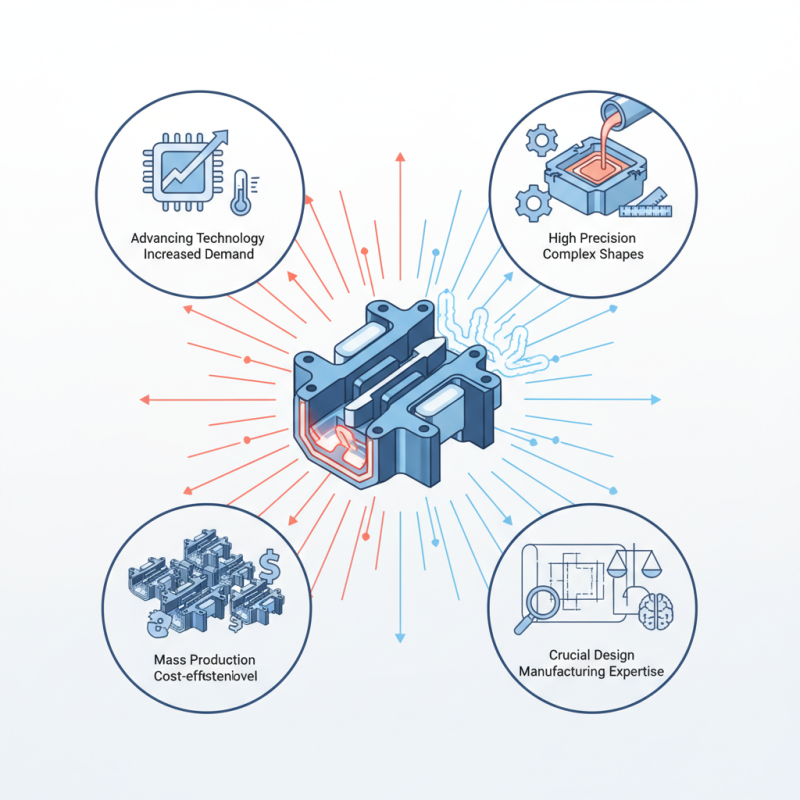
Die Casting Heat Sink plays a crucial role in managing heat in various electronic devices. As technology advances, the demand for efficient cooling solutions increases. Many engineers now rely on die casting for creating heat sinks. This method produces complex shapes with high precision.
A Die Casting Heat Sink is typically made from aluminum or zinc alloys. These materials have excellent thermal conductivity. They efficiently dissipate heat, protecting sensitive components. The process also allows for mass production, making it cost-effective.
However, selecting the right design is crucial. Poor designs can lead to hotspots and inefficient heat distribution. This consideration highlights the importance of expertise in manufacturing. Engineers must balance cost, performance, and design intricacies. Understanding these aspects ensures a reliable heat management solution.
What is Die Casting Heat Sink?
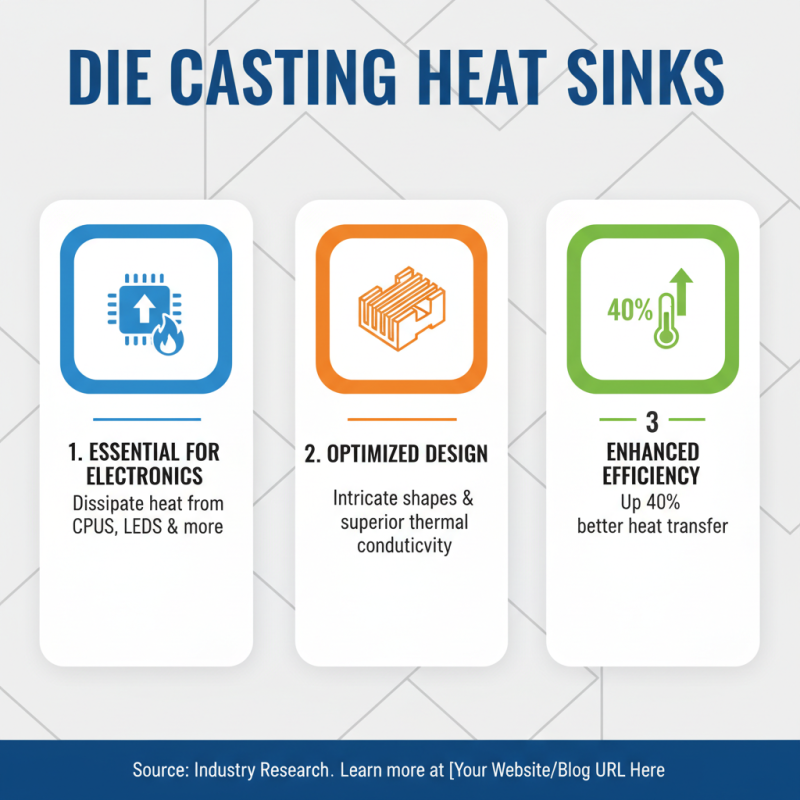
Die casting heat sinks are essential components in many electronic devices. They are designed to dissipate heat generated by components like CPUs and LEDs. By using die casting, manufacturers produce heat sinks with intricate designs and superior thermal conductivity. Research indicates that die casting can improve heat transfer efficiency up to 40% compared to other manufacturing methods.
The process of die casting involves injecting molten metal into a mold under high pressure. This technique allows for the creation of complex shapes and fine details. According to a report from Market Research Future, the global die casting market is projected to reach $24 billion by 2025. This growth reflects the rising demand for efficient thermal management solutions across industries. However, creating these precision parts is not without challenges. Potential defects, such as porosity and dimensional inaccuracies, can affect performance.
Manufacturing heat sinks via die casting demands a deep understanding of material properties and production techniques. These factors influence overall quality and performance. Companies must balance cost and efficiency while ensuring reliable production. While die casting heat sinks have clear benefits, manufacturers often face hurdles in achieving perfect output. Continuous improvement in processes is vital to fully harness the advantages of die casting technology in heat sink production.
The Process of Die Casting in Heat Sink Production
Die casting is a key process in the production of heat sinks. This method involves forcing molten metal into a mold cavity. This ensures a precise shape and size. Heat sinks made through die casting can achieve complex geometries. They are ideal for applications in electronics where efficient heat dissipation is crucial.
The die casting process starts with creating a mold, typically made from steel or iron. The metal is heated until it reaches a liquid state. Then, the molten metal is injected into the mold at high pressure. As it cools down, it solidifies into the desired shape. This technique allows for uniform thickness and can enhance thermal conductivity.
However, there are challenges to consider. Variations in temperature can lead to defects. These defects can compromise the performance of the heat sink. Hence, temperature control is essential throughout the process. It's also crucial to monitor the quality of the molds regularly. Without proper maintenance, the lifespan of the molds can shorten, impacting production efficiency.
Heat Sink Production: Die Casting Process Efficiency
This chart illustrates the time allocated to various phases of the die casting process used in heat sink production. Understanding these timelines is critical for optimizing production efficiency and ensuring high-quality products.
Advantages of Using Die Casting for Heat Sinks
Die casting is a pivotal process used in manufacturing heat sinks. This technique involves forcing molten metal into a mold. It creates finely detailed and robust components crucial for thermal management in electronics. A report by Grand View Research estimates the global die casting market will reach $81 billion by 2027, driven by rising demand for efficient heat sinks.
Using die casting for heat sinks offers several advantages. One significant benefit is precision. The die casting process enables tight tolerances, meaning parts fit better. This results in enhanced thermal conductivity, which is vital for electronics' performance. Moreover, die casting can produce complex geometries that promote better airflow. According to a study by ResearchAndMarkets, such designs improve cooling efficiency by up to 30%.
Tip: When selecting materials for die casting, consider their thermal properties. Aluminum and zinc alloys are popular due to their excellent conductivity.
Another advantage lies in production speed. Die casting can produce large quantities in a short time. This efficiency is crucial for industries such as automotive and consumer electronics. However, tooling costs can be high, which may deter small manufacturers from this method.
Tip: Evaluate the long-term benefits against initial costs. This analysis may reveal die casting as the best choice despite upfront investments.
Applications of Die Casting Heat Sinks in Various Industries
Die casting heat sinks are crucial in managing heat within various industries. They efficiently dissipate heat from critical components, ensuring optimal performance and longevity. These heat sinks are widely used in electronics, automotive, and aerospace sectors. According to a report by Mordor Intelligence, the global heat sink market is projected to surpass $11 billion by 2025, highlighting the increasing demand for effective thermal management solutions.
In the electronics industry, die casting heat sinks play a vital role in cooling devices like CPUs and GPUs. High-performance computing requires efficient heat dissipation to maintain functionality. In automotive applications, they help manage the temperature of electric vehicles, where battery performance is directly linked to thermal management. The growing trend towards electric mobility drives the need for advanced heat sink solutions. A study from Research and Markets indicates that the automotive heat sink market is expected to grow at a CAGR of 7% from 2020 to 2025.
Despite the advancements in die casting technology, challenges remain. The complexity of designs can increase production costs and lead to potential flaws. Manufacturers must ensure precise fabrication to avoid inefficiencies. Additionally, the environmental impact of materials used in die casting is an ongoing concern. Addressing these issues while maintaining the integrity of the final product is essential for future growth in the industry.
What is Die Casting Heat Sink and Why is it Important? - Applications of Die Casting Heat Sinks in Various Industries
| Industry |
Application |
Materials Used |
Benefits |
| Electronics |
Computer Cooling Systems |
Aluminum, Zinc |
Efficient thermal management, lightweight |
| Automotive |
Engine Components |
Aluminum Alloys |
High thermal conductivity, durability |
| Aerospace |
Heat Exchangers |
Magnesium, Aluminum |
Weight reduction, improved heat dissipation |
| Consumer Appliances |
Refrigerators |
Zinc, Aluminum |
Cost-effective production, thermal efficiency |
| LED Lighting |
Heat Sinks |
Aluminum |
Enhanced cooling, extended lifespan of LEDs |
The Importance of Heat Management in Electronics Using Die Casting
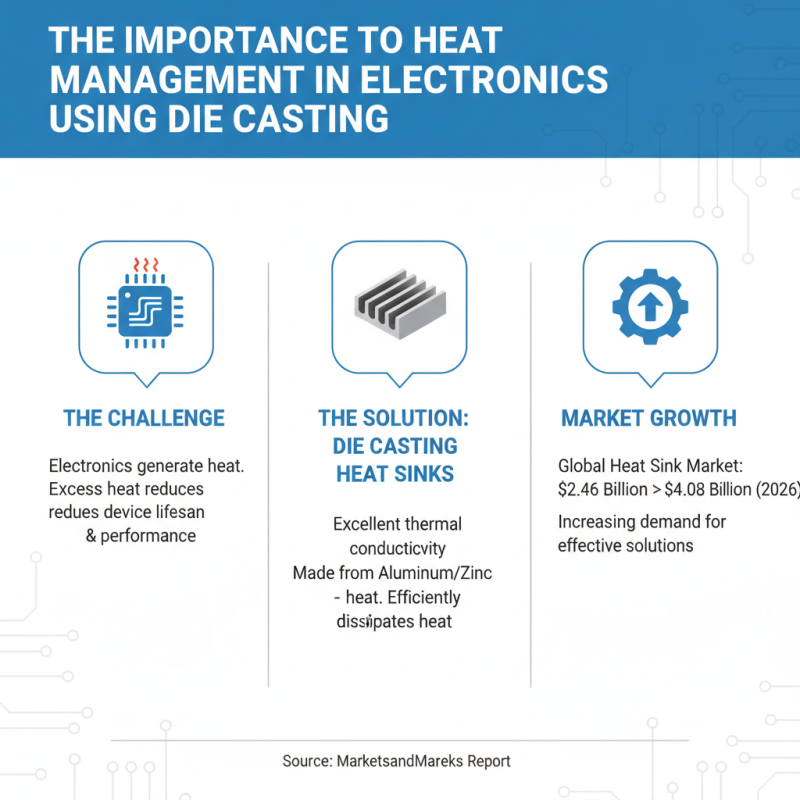
In the world of electronics, efficient heat management is crucial. Electronic devices produce heat that must be dissipated to ensure longevity and performance. Die casting heat sinks serve this vital function. Made from metals like aluminum and zinc, they provide excellent thermal conductivity. According to a report by MarketsandMarkets, the global heat sink market size is projected to grow from USD 2.46 billion in 2021 to USD 4.08 billion by 2026. This highlights the increasing demand for effective heat management solutions in electronics.
Effective heat dissipation leads to improved reliability. Devices that overheat can fail, leading to costly repairs or replacements. The efficiency of a heat sink significantly affects performance. Die casting allows for precise manufacturing and complex designs, enhancing heat transfer. A well-designed heat sink can lower the temperature of components by up to 30%, as stated in an industry analysis by Grand View Research. Thus, investing in quality heat sinks is essential for any electronic product.
Tips: Always consider the specific thermal requirements of your device. A miscalculated heat sink can cause overheating. Testing should be done to ensure optimal performance. Regular evaluations of your cooling solutions can identify areas for improvement. Remember, even small adjustments can lead to significant enhancements in overall efficiency.
 008613968780263

 CONTACT NUMBER
 CONTACT