How to Choose the Right Die Casting Heat Sink for Your Project?
When embarking on a new project, selecting the right components is crucial. A key element in electronics design is the Die Casting Heat Sink. This component plays a vital role in thermal management. A well-chosen heat sink ensures optimal performance and longevity of electronic devices.
Understanding the specifics of your project can help simplify your decision. The size, material, and design of a Die Casting Heat Sink can significantly impact efficiency. Each project presents unique challenges. Evaluating the thermal requirements and mechanical constraints is essential.
It’s easy to overlook details. Sometimes, a seemingly small decision can lead to major setbacks. Choosing a heat sink without proper analysis may cause overheating issues. This can compromise your whole system. Reflect on your choices carefully. The right Die Casting Heat Sink can make all the difference in your project's success.
Factors to Consider When Selecting a Die Casting Heat Sink
Choosing the right die casting heat sink is crucial for efficient thermal management in electronic devices. Factors such as material, design, and thermal conductivity play significant roles in the performance of heat sinks. Research indicates that aluminum heat sinks provide excellent thermal conductivity, ranging from 150 to 200 W/mK. This property ensures effective heat dissipation, which is necessary for high-performance applications.
When selecting a heat sink, consider the thermal performance needed for your project. Evaluate the power output of your electronics. A high-output device may require a more robust heat sink. Moreover, the environment where the heat sink will operate is essential. For example, a humid climate may necessitate corrosion-resistant materials.
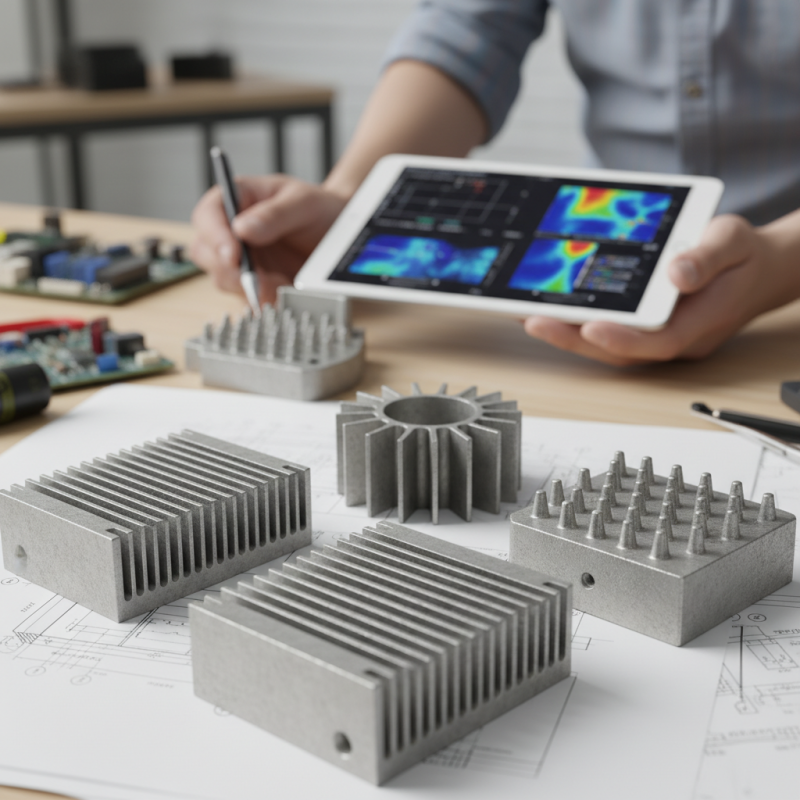
**Tips:** Test different designs on a smaller scale before full production. Conduct thermal simulations to understand better how your chosen heat sink performs. Real-world results can differ from predictions. Always be prepared to iterate based on performance data and feedback.
Material Options for Die Casting Heat Sinks and Their Properties
When selecting a die casting heat sink, material choice significantly impacts performance. Aluminum is a popular option due to its excellent thermal conductivity and lightweight nature. It ensures efficient heat transfer while keeping the overall weight down. Zinc, while heavier, offers durability and good casting characteristics. Both materials provide different advantages based on project needs.
Copper is another viable option. It excels at dissipating heat but is typically more expensive. It’s suitable for high-performance applications where thermal efficiency is critical. The choice among these materials should consider heat dissipation requirements, weight limitations, and budget constraints.
Tip: Think about the environment where the heat sink will be used. Consider factors like humidity, exposure to chemicals, and temperature fluctuations. This analysis can guide your material choice.
Prototyping can help identify the best material. Test different options in real-world conditions to make informed decisions. Early adjustments save time and resources later in the project. Remember, what works for one application may not suit another. Keep evaluating and refining your choices for optimal results.
Material Options for Die Casting Heat Sinks
This chart illustrates the thermal conductivity of various materials commonly used for die casting heat sinks. Higher thermal conductivity enables better heat dissipation, which is crucial for effective heat management in electronic applications.
Understanding Heat Dissipation Needs for Your Specific Application
When selecting a die casting heat sink, understanding your application’s specific heat dissipation needs is crucial. Different projects generate varying amounts of heat. For instance, electronic devices often need efficient heat management to prevent failure. Reports indicate that devices can lose performance at temperatures above 85°C. Thus, choosing the right heat sink can be the difference between success and failure.
The material of the heat sink significantly impacts its performance. Aluminum is a popular choice due to its lightweight and excellent thermal conductivity. However, newer alloys may offer better heat dissipation properties and can withstand higher temperatures. According to industry studies, heat sinks made from die cast materials can improve thermal performance by up to 30% compared to others. This makes tailored designs essential based on your application requirements.
It’s important to consider the environment as well. Heat sinks may need coatings or finishes for added durability. Some heat sinks are designed to be used in harsh conditions, while others perform better in controlled environments. Not recognizing such factors can lead to underperformance. Ultimately, the right heat sink depends on many variables, including size constraints and airflow patterns.
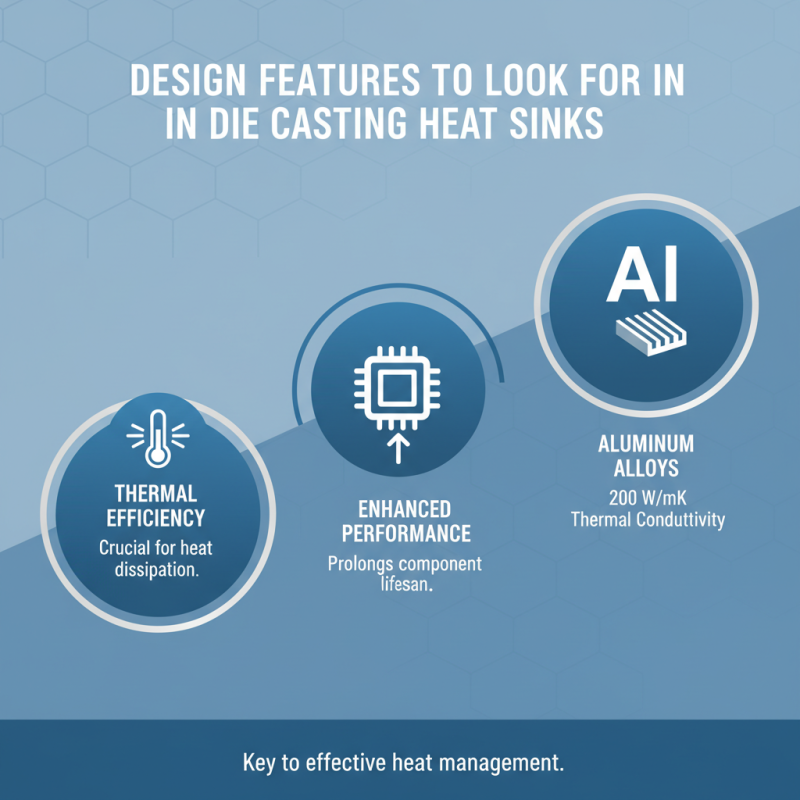
Design Features to Look for in Die Casting Heat Sinks
When selecting a die casting heat sink, understanding its design features is crucial. Look for thermal efficiency, which determines how well heat is dissipated. A well-designed heat sink can enhance performance and prolong the lifespan of your electronic components. Research indicates that the thermal conductivity of aluminum alloys, commonly used in casting, is around 200 W/mK. This figure highlights their effectiveness in managing heat.
Another key feature is the surface area. Larger surface areas contribute to better heat dissipation. Fins, for example, can significantly increase the contact area with air, improving cooling efficiency. Studies show that adding fins can enhance thermal performance by up to 40% in some designs. It's essential to balance size with weight to avoid placing excess strain on your assembly.
Tip: Prioritize materials that fit your project's thermal requirements and budget constraints. Consider opting for anodizing treatments for added durability.
In die casting, precision is vital. Tolerances must be tight to ensure proper fit and heat transfer. Aim for dimensional accuracy within 0.1 mm to ensure optimal performance. Note that the creation of complex shapes may introduce variability in effectiveness. Therefore, each design should undergo thorough testing before full-scale production.
Cost-Effectiveness and Production Efficiency in Heat Sink Selection
When selecting a die casting heat sink, cost-effectiveness and production efficiency are crucial. According to a report by Grand View Research, the global heat sink market is expected to reach $10.3 billion by 2025, driven by demand for improved thermal management in electronic devices. Understanding the role of material choice can significantly impact both investment and performance. Aluminum remains popular due to its balance of thermal conductivity and affordability, making it an industry standard.
However, balancing cost and quality can be tricky. While cheaper options may seem appealing, they can result in overheating issues and product failures. This can lead to increased costs in the long run. In a study by Frost & Sullivan, 68% of engineers reported that selecting the right thermal management component directly affected their project’s overall success. Failing to invest in a suitable heat sink can lead to inefficiencies and unexpected expenses, raising the question: is short-term savings worth the potential risks?
Production efficiency also plays a key role in making a decision. A well-designed heat sink can reduce manufacturing time and scrap rates. Reports show that optimizing the shape and size can save up to 20% in production costs. However, this requires expertise in thermal dynamics and manufacturing processes. Ignoring these factors can lead to expensive trial-and-error phases and project delays. This underscores the necessity of a thorough evaluation to ensure both cost-effectiveness and efficiency.
How to Choose the Right Die Casting Heat Sink for Your Project? - Cost-Effectiveness and Production Efficiency in Heat Sink Selection
| Heat Sink Type |
Material |
Thermal Conductivity (W/m·K) |
Weight (g) |
Cost ($) |
Production Time (days) |
| Standard Finned Heat Sink |
Aluminum Alloy |
205 |
100 |
15 |
10 |
| Custom Shape Heat Sink |
Copper |
385 |
150 |
30 |
15 |
| Compact Heat Sink |
Aluminum Alloy |
205 |
75 |
12 |
8 |
| Large Finned Heat Sink |
Aluminum Alloy |
205 |
250 |
25 |
12 |
| Extruded Heat Sink |
Aluminum Alloy |
205 |
90 |
18 |
9 |
 008613968780263

 CONTACT NUMBER
 CONTACT