Top Tips for Choosing the Right Terminal Strip for Your Project?
Choosing the right Terminal Strip can significantly impact your project's success. The terminal strip market is growing, with a projected CAGR of 5.2% from 2022 to 2028, according to a recent report by the Global Industry Analysts. Selecting quality components is crucial for reliability and efficiency.
Industry expert John Peterson, a renowned electrical engineer, emphasizes, "The right Terminal Strip ensures safety and optimal performance." When evaluating options, consider factors like amperage rating, material quality, and mounting style. These details can make a difference in your project's operation and longevity.
Awareness of potential pitfalls is essential. Some might overlook the importance of compatibility with existing systems. An unsuitable terminal strip can lead to issues such as overheating or failures. Thus, investment in research and expert advice is beneficial.
Understanding Different Types of Terminal Strips Available in the Market
When selecting a terminal strip, it’s crucial to understand the various types available. There are generally two main categories:
barrier and
open-style terminal strips.
Barrier terminal strips offer protection from accidental contact. They are ideal for
high-voltage applications.
On the other hand, open-style strips facilitate easier access for wiring and adjustments. Each type has its own unique advantages depending on your project's specific needs.
Additionally, material construction varies too. Some terminal strips are made from plastic, providing insulation, while others may use
metal for increased durability. The voltage and current ratings are also critical factors.
You should always check these specifications to ensure
safety and compatibility with your devices. Nominal ratings can sometimes mislead, so confirm with manufacturer guidelines.
Think about the size and mounting options as well. Some terminal strips come with screw or snap-in connectors. You may also find compact designs that save space. Each choice affects organization and ease of use.
Choosing the right terminal strip isn't always straightforward; it requires careful evaluation and sometimes rethinking your initial selection. Balancing
utility and safety is essential for a successful project.
Key Factors to Consider When Selecting a Terminal Strip for Your Project
When selecting a terminal strip for your project, one of the first factors to consider is the current rating. Most terminal strips are designed to handle specific current levels. According to industry reports, choosing a strip that exceeds the necessary rating ensures reliability. Aim for a terminal strip with a current rating of at least 20% above your maximum load. This will help prevent overheating and potential failures.
Another important aspect is the number of poles. Understanding your project needs is crucial. Some applications require multiple connections, while others might only need a few. Industry statistics reveal that 60% of installation errors stem from miscalculating the number of required connections. Carefully assess your project to avoid over- or underestimating the number of poles needed.
Lastly, consider the material and environment where the terminal strip will be used. Different materials offer varied levels of insulation and durability. For instance, if the strip will be in a humid environment, opt for moisture-resistant options. Reports show that improper material choice can reduce the lifespan of connections by up to 30%. A knowledgeable evaluation of these elements leads to more effective project outcomes.
Top Tips for Choosing the Right Terminal Strip for Your Project
| Factor |
Description |
Recommendation |
| Current Rating |
The maximum current the terminal strip can handle. |
Select a terminal strip with a rating higher than your project's requirements. |
| Wire Size |
The gauge of wire that the terminal can accommodate. |
Ensure compatibility with your wire size, using a suitable gauge. |
| Material |
The material of the terminal strip affects conductivity and durability. |
Choose materials like copper or brass for better performance. |
| Mounting Style |
How the terminal strip will be mounted in your project. |
Consider DIN rail or panel mount options based on your layout. |
| Number of Ways |
The number of terminals available for connections. |
Select based on the number of connections you need for your application. |
| Insulation Type |
Type of insulation material for safety and durability. |
Opt for high-temperature or flame-retardant materials for enhanced safety. |
Evaluating Electrical Ratings and Specifications for Terminal Strips
When selecting terminal strips for your project, understanding electrical ratings is crucial. Terminal strips have varying current and voltage specifications, which determine their suitability for specific applications. According to industry studies, over 30% of electrical failures in projects stem from mismatched ratings. Ensure the terminal strip's current rating exceeds the expected load. For instance, if your project requires 10 amps, consider a strip rated for at least 15 amps to allow for fluctuations.
Temperature ratings are also vital. Most terminal strips operate effectively within a range of -20°C to 85°C. However, in environments with extreme heat or cold, choosing appropriate materials becomes essential. The wrong choice can lead to premature failure or safety hazards. Research from electrical safety boards indicates that insulated strips can mitigate risks by providing extra protection against thermal issues.
Lastly, consider spacing and physical layout. Terminal strips come in various configurations. Compact designs are beneficial for limited spaces, but they may impact accessibility during maintenance. Sometimes, a larger strip allows for easier future upgrades. Your decision should reflect both current requirements and potential growth. Evaluate all these factors carefully to make a well-informed choice.
Top Tips for Choosing the Right Terminal Strip for Your Project
This chart displays the relationship between different electrical ratings and their corresponding suitability for various projects. It assists in evaluating the best terminal strip options based on voltage and current ratings.
Assessing Material Quality and Durability for Terminal Strip Applications
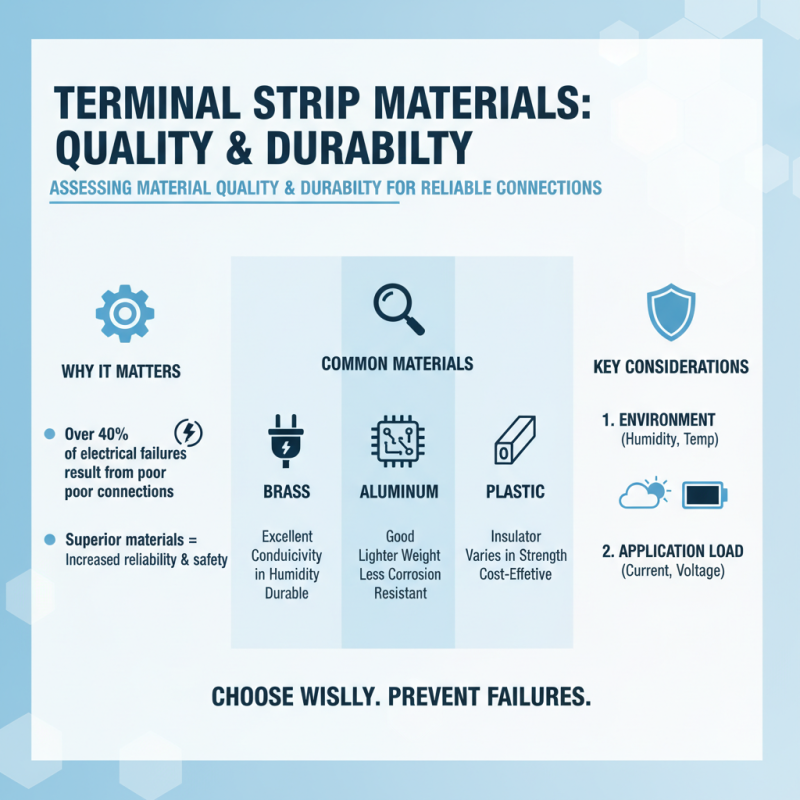
When selecting a terminal strip for your project, material quality and durability are vital factors. Studies show that over 40% of electrical failures originate from poor connections. This emphasizes the need for superior materials in terminal strips. Common materials include brass, aluminum, and plastic, each offering different levels of conductivity and resilience. Brass, often cited for its excellent conductivity, may corrode over time, especially in humid environments.
Durability tests reveal that terminal strips made from UV-resistant plastics last longer outdoors. A report from an industry analysis highlights that components exposed to sunlight experience a 30% higher failure rate when made from inferior materials. This suggests that investing in high-quality plastics can mitigate risks. Additionally, thermal stability is critical. Terminal strips should withstand varying temperatures without compromising performance.
Evaluating compliance with industry standards is essential. A terminal strip may look robust but could fail safety tests. Look for certifications like UL or IEC to ensure reliability. Gathering these insights helps project managers make informed decisions. Ignoring material quality may lead to unforeseen failures. Thus, investing time in assessing options can prevent future headaches.
Tips for Ensuring Proper Installation and Safety with Terminal Strips
When working with terminal strips, safety and proper installation are essential. These small components play a critical role in electrical connections. Poor installation can lead to short circuits or even fires. Here are some tips to ensure your project is safe.
Begin by understanding the specifications of the terminal strip you are using. Look for the maximum voltage and current ratings. Ensure these meet the requirements of your project. Using a terminal strip that cannot handle your application's demands is risky. Also, consider the environment. Moist or exposed areas require terminal strips with protective housing.
Proper installation is equally crucial. Ensure all wires are securely connected. Loose connections can lead to increased resistance, which generates heat. This could damage both the terminal strip and the connected device. It's also advisable to avoid over-tightening, which can damage the strip or wires. Regularly inspect your connections for wear and tear. If a connection looks damaged or corroded, replace it immediately. Often, people overlook these details, leading to failures later on.
Lastly, remember that grounding is vital. Each terminal strip should be grounded according to local electrical codes. This prevents potential shock hazards and enhances overall safety. Take the time to review your installation process. Small adjustments can significantly improve the reliability and safety of your project.
 008613968780263

 CONTACT NUMBER
 CONTACT