Leave Your Message

Best Optical Fiber Adapter Manufacturers in China

Choosing the right Optical Fiber Adapter manufacturer in China takes more than comparing prices. Buyers should examine connector compatibility, insertion loss, return loss, material quality, and inspection records. A small detail matters: a dusty end face or uneven sleeve can disrupt a stable connection. Ask how each supplier checks alignment, polishes ceramic ferrules, and controls production batches. Request test reports for the exact adapter type you plan to buy. Catalog claims help, but real documentation matters more.

Optical communications pioneer Charles K. Kao’s work helped establish the importance of low-loss optical fiber. I can’t verify a verbatim Kao quotation specifically about adapters, so I won’t invent one. The practical takeaway for this guide is: “Reliable connections depend on precise alignment and repeatable testing.” That sentence is an editorial summary, not a quotation from Kao. It points to a useful way to assess manufacturers, from single-mode SC adapters to multi-fiber solutions. Look for clear specifications, traceable quality checks, and responsive technical support. A polished product page is not proof. Even a capable factory may have gaps, so compare evidence and ask follow-up questions. This guide introduces Chinese manufacturers and the details worth checking before choosing a supplier.

Best Optical Fiber Adapter Manufacturers in China

What Optical Fiber Adapters Are and How They Work

Best Optical Fiber Adapter Manufacturers in China

What Optical Fiber Adapters Are and How They Work

An optical fiber adapter joins two connector plugs so light can pass between fiber links. A precision sleeve inside the adapter aligns their ferrules, the small ceramic or metal tips holding the fibers. The adapter does not amplify or convert the signal. It keeps the fiber ends aligned.

Small part. Big consequence. The Fiber Optic Association’s Reference Guide to Fiber Optics cites about 0.3 dB as a common connector insertion-loss figure. That is a useful benchmark, not a guarantee for every adapter or test setup. Dust, worn ferrules, and poor mating can increase loss. IEC 61754-1 specifies connector-interface dimensions, while actual performance depends on the matched connector type and test conditions.

For buyers assessing manufacturers in China, request test records for insertion loss and return loss, plus samples for hands-on inspection. Check that adapter type, keying, sleeve material, and connector polish match the installation. A blue sleeve or green sleeve is not proof of performance by itself. That detail is easy to overlook. Even a well-made adapter can underperform when technicians mate dirty connectors or mix incompatible interfaces. Cleaning and rechecking the connection matters.

Common Adapter Types, Materials, and Performance Standards

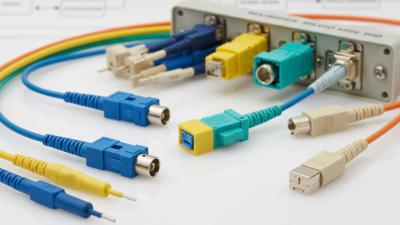
Choosing an optical fiber adapter starts with matching the connector interface and fiber type. SC and LC adapters are common in patch panels, while FC and ST versions suit specific equipment or installed networks. Simplex adapters connect one fiber; duplex models align two. Single-mode and multimode connections are not interchangeable in every application. Check the connector’s end-face polish too: UPC and APC should not be mated together. Small mismatches can increase signal loss.

Adapter sleeves are often made from zirconia ceramic, which helps keep ferrules aligned. Metal or reinforced polymer housings provide mounting strength, depending on the installation. Look for documented insertion-loss and return-loss results, but compare test conditions and grades carefully. IEC 61754 describes connector interface dimensions, while IEC 61753 addresses performance requirements. One detail is easy to miss: standards compliance does not guarantee identical performance across products. Verify the exact configuration and inspect sample parts when practical.

Tips: Confirm connector type, polish, fiber mode, and panel cutout before ordering. Keep dust caps on unused ports. A clean-looking adapter can still be contaminated, so inspect and clean it before testing.

How to Evaluate Optical Fiber Adapter Manufacturers in China

When evaluating optical fiber adapter manufacturers in China, look beyond catalog prices. The ITU’s Facts and Figures 2023 estimated that 5.4 billion people were online, about 67% of the global population. That scale depends on reliable networks, where small passive components still affect link performance. Small details matter.

Ask how the factory controls adapter alignment, sleeve quality, endface cleanliness, and insertion loss. Request test methods and sample records, not only a datasheet. IEC 61754 defines connector interface dimensions, while IEC 61300-3-4 and IEC 61300-3-6 cover attenuation and return-loss testing. Check whether the supplier tests production lots against stated limits and can trace samples to a batch. A polished report is useful, but raw measurement records are better.

For qualification, compare samples from multiple production lots. Inspect fit, surface finish, and dust protection under ordinary handling; then review performance after environmental testing relevant to your installation. Confirm packaging prevents endface contamination during shipping. Ask about process changes and corrective actions, too. I would not treat one successful sample as proof of stable production. It is easy to overlook that distinction. A factory visit or independent audit can help verify equipment, calibration records, and inspection routines before a large order.

Notable Optical Fiber Adapter Manufacturers in China

China’s optical fiber adapter manufacturers serve telecom, data-center, industrial, and broadband projects. Notable suppliers often specialize in connector interfaces, housing materials, or high-volume assembly. Their catalogs may include single-mode and multimode adapters, simplex and duplex formats, and common connector types. Check the exact interface, sleeve material, insertion loss, and return loss in each product specification. Small differences matter.

A capable manufacturer should explain its inspection process and provide traceable test records for sample batches. Ask how it controls alignment sleeves, end-face cleanliness, and dimensional tolerances. These details affect connection stability in a crowded patch panel. Factory photos can help, but they do not replace sample testing. Price alone is a poor guide.

Tips: Request samples before a large order. Test fit, optical performance, and packaging with your own cables and installation tools. Confirm lead times, customization limits, and replacement procedures in writing. One point is easy to miss: an adapter can meet its stated specification yet feel awkward during repeated field installation. Evaluate the product in realistic conditions, not only on a datasheet.

Best Optical Fiber Adapter Manufacturers in China - Notable Optical Fiber Adapter Manufacturers in China

A practical comparison of common optical fiber adapter families and the product capabilities buyers may evaluate when sourcing from manufacturers in China.

Adapter Family Common Connector Interface Typical Configurations Alignment Method Common Applications Key Sourcing Checks
SC SC connector; commonly uses a 2.5 mm ferrule interface Simplex or duplex; available with different mounting and housing styles Precision sleeve aligns the connector ferrules Telecommunications, data networks, optical distribution frames, and test equipment Confirm connector polish compatibility, sleeve material, panel cutout, and specified insertion-loss test conditions.
LC LC connector; commonly uses a 1.25 mm ferrule interface Simplex or duplex; compact formats are common in high-density panels Precision sleeve aligns the connector ferrules High-density patch panels, data centers, and telecommunications equipment Check simplex or duplex format, clip or flange design, mounting dimensions, and UPC/APC polish compatibility.
FC FC connector; commonly uses a 2.5 mm ferrule interface Typically simplex, with threaded coupling Precision sleeve aligns the connector ferrules; the threaded coupling secures the connection Test and measurement systems, laboratory links, and some telecommunications installations Verify thread and panel-mount details, sleeve specification, and compatibility with the required connector polish.
ST ST connector; commonly uses a 2.5 mm ferrule interface Typically simplex, with bayonet-style coupling Precision sleeve aligns the connector ferrules Legacy premises networks, industrial links, and some multimode installations Confirm bayonet coupling dimensions, panel fit, and the intended fiber and connector type.
MPO / MTP-compatible format Multi-fiber push-on connector interface Multi-fiber adapter formats; housing and key orientation vary by design Connector guide features and adapter geometry align the multi-fiber interface High-density data-center cabling and parallel-optics links Specify fiber count, key orientation, polarity scheme, connector gender, and the required inspection and test process.
Hybrid adapter Two different connector interfaces, depending on the adapter design Typically a defined connector-type combination in a single housing Separate alignment features accommodate each connector interface Equipment migration, laboratory setups, and links between different connector formats Confirm the exact connector combination, polish types, mechanical fit, and any optical-performance limits required for the link.

Selection note: Adapter performance and dimensions depend on the specific design and test method. UPC and APC connector end faces are not interchangeable in a mated connection; confirm matching polish types and request the applicable dimensional and optical test reports before ordering.

Manufacturing Processes, Quality Control, and Industry Trends

Best Optical Fiber Adapter Manufacturers in China

Manufacturing Processes, Quality Control, and Industry Trends

Optical fiber adapter production starts with careful molding of sleeves and housings. Ceramic sleeves need consistent inner diameters, smooth surfaces, and clean edges. Small defects can increase insertion loss or cause unstable connections. Assembly teams align components, then inspect fit and connector movement. In a well-run factory, technicians check samples throughout each shift, not only at the end. Testing often includes insertion loss, return loss, and dimensional checks. Results should be recorded against clear acceptance limits. Practices vary, so buyers should ask how a supplier handles failed samples and production changes.

Tips: Request recent test records and a sample inspection report. Confirm which connector types and tolerances are covered. Ask how adapters are protected from dust during packing.

Quality control matters beyond the test bench. Operators need clean work areas, calibrated instruments, and traceable materials. A supplier should explain how it prevents sleeve contamination and controls assembly variation. Visit audits can reveal details that a brochure cannot, such as storage conditions or rework procedures. Yet a single visit is only a snapshot; repeat performance deserves attention.

Industry trends include tighter loss targets, more automated inspection, and growing demand for compact, high-density panels. Automation can improve consistency, but it does not replace process discipline. Buyers should compare measured performance, production capacity, and response time rather than relying on claims alone. Some specifications remain easy to misunderstand. Clarify test methods before comparing quotations.