008613968780263


Pin Terminal selection is becoming a serious engineering and sourcing decision. Small contacts carry large responsibilities inside vehicles, appliances, industrial controls, and power equipment. A loose crimp can create heat, vibration failures, and expensive field returns.
Industry data shows why this market deserves closer attention. MarketsandMarkets estimates the global electrical connectors market will grow from approximately USD 84 billion in 2024 to more than USD 105 billion by 2029. Bishop & Associates also reports continuing connector demand from automotive electrification, data infrastructure, and industrial automation. These sectors require stable conductivity, repeatable insertion force, corrosion resistance, and documented quality control.
“Connectivity is the backbone of everything we do,” said Terrence Curtin, Chief Executive Officer of TE Connectivity. His statement reflects a practical reality. A Pin Terminal may be smaller than a fingernail, yet it can influence an entire assembly’s safety and service life. Buyers should examine plating thickness, copper alloy, crimp performance, tooling compatibility, and test evidence. Standards such as IEC 60512 can support more disciplined evaluation.
Not every catalog specification tells the full story. That matters.
This guide reviews ten Pin Terminal manufacturers serving global buyers. The comparison considers manufacturing scale, material consistency, customization, certifications, delivery capability, and technical support. It also recognizes an uncomfortable point: the lowest unit price may not produce the lowest ownership cost. Supplier claims still require verification through samples, audits, and application testing. Mistakes happen, even in mature supply chains. A careful buyer leaves room for that possibility.
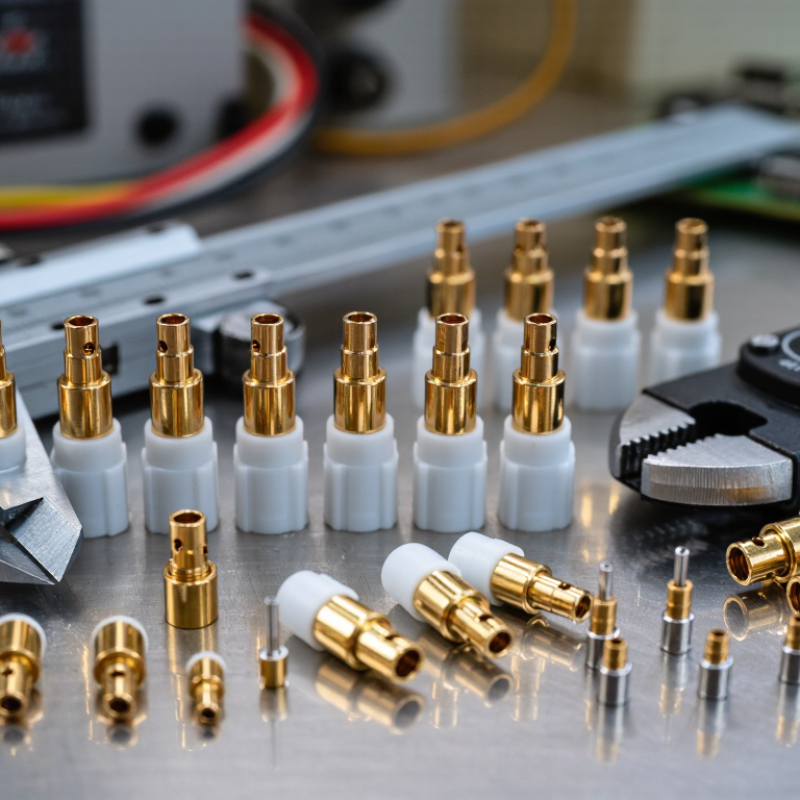
Pin terminals are compact connectors that secure stranded wires to studs, terminal blocks, or circuit boards. Their design affects contact stability, installation speed, and maintenance costs.
Common forms include insulated pin terminals, non-insulated pins, twin-wire pins, and bootlace ferrules. Insulated versions add color-coded sleeves and reduce accidental contact. Twin-wire models accept two conductors in one crimp barrel. That detail matters in control cabinets. A poor fit can loosen under vibration.
Material selection depends on current, environment, and assembly method. Tinned copper offers strong conductivity and better oxidation resistance than bare copper. Brass provides useful mechanical strength, although electrical performance varies by alloy. Stainless steel suits some fastening duties but is rarely ideal for highly conductive paths.
Insulation commonly uses nylon or heat-resistant polymers. Check temperature ratings carefully. Heat, oil mist, moisture, and repeated bending can expose weak materials.
Industrial applications include motor control panels, battery systems, factory sensors, lighting equipment, and automotive harnesses. Reliable manufacturers control strip dimensions, plating thickness, crimp geometry, and pull-out strength.
Buyers should request material certificates, test data, and sample crimps before approving volume orders. Tool compatibility also deserves attention; a terminal may look correct yet fail with the wrong die.
In practice, installation errors remain common. Even a well-made terminal cannot rescue an under-stripped wire or uneven crimp. Specifications often emphasize copper purity while ignoring tooling and inspection routines. That gap deserves more scrutiny.
Global buyers should evaluate pin terminal manufacturers beyond catalog breadth and low quotations. Grand View Research valued the global electrical connectors market at about USD 87.9 billion in 2023, with continued growth expected through 2030. This expansion increases supplier choice, but it also makes verification harder. Ask for material grades, plating thickness, contact resistance data, and crimp-performance results. Small differences matter. Copper alloy, tin plating, and controlled barrel dimensions can determine whether a terminal survives vibration and heat.
Testing capability should match the application. IEC 60512 provides recognized methods for measuring connector electrical, mechanical, and environmental performance. A capable manufacturer should show test conditions, sample quantities, and traceable records, not only a pass statement. ISO 9001 certification supports process control, but it does not guarantee every shipment is consistent. Request first-article reports, lot identification, and documented corrective actions. The 2024 Bishop & Associates connector industry forecast reported a global connector market exceeding USD 80 billion, highlighting the scale of supply-chain risk.
Production resilience deserves equal attention. Review mold maintenance, automated inspection, backup tooling, and realistic monthly capacity. Confirm lead times with actual order histories. I would also audit packaging, because bent terminals often begin with poor tray design. Factory visits are useful, yet one visit can create false confidence. Independent sample testing remains necessary. A supplier may look excellent on paper and still miss a difficult crimp specification. That uncomfortable possibility should shape the evaluation.
The best pin terminal manufacturers combine stable materials, accurate crimp geometry, and repeatable inspection. Their product strengths usually appear in details: oxygen-free copper options, tin or nickel plating, controlled barrel dimensions, and burr-free stamping. These features support lower contact resistance and stronger wire retention in compact assemblies.
Grand View Research valued the global electrical connectors market at about USD 84 billion in 2023, with continued growth expected through 2030. This expansion increases demand for terminals that support automation, electric vehicles, industrial controls, and renewable-energy equipment.
Leading manufacturers often provide wire ranges, pull-force data, temperature ratings, and mating-cycle results. Strong suppliers also maintain ISO 9001 systems and test products against relevant IEC, UL, or CSA requirements.
Material choice matters. Tin-plated terminals suit many general applications, while nickel plating can improve heat and corrosion resistance. Some manufacturers offer high-conductivity copper alloys for power circuits and precision contacts for signal applications. Not every claimed advantage survives field use. A low unit price may hide inconsistent crimp height or plating thickness. Buyers should compare samples, independent test records, tooling compatibility, and lot traceability before ranking suppliers. No ranking is perfect. Real installation evidence remains valuable.
10 Best Pin Terminal Manufacturers for Global Buyers
International Sourcing, Certification, and Quality Considerations
Global buyers should evaluate pin terminal manufacturers beyond catalogue price. Material traceability, crimp consistency, and documented process control often determine field reliability. Copper alloy composition should match the stated specification, while plating thickness needs regular verification. Ask for batch records, dimensional reports, and retained samples before approving production.
Certification reduces uncertainty, but it does not replace testing. DIN 46228 requirements are widely referenced for wire-end ferrules and pin terminals. Depending on the application, buyers may also require IEC, UL, RoHS, or REACH documentation. The ISO Survey 2023 recorded more than 1.2 million ISO 9001 certificates worldwide, showing broad adoption of quality systems. However, a certificate alone cannot prove stable crimp performance.
Inspect the details.
A practical sourcing audit should review tooling calibration, pull-force testing, salt-spray results, and packaging controls. Sampling plans should follow recognized statistical methods, not personal preference. The latest World Bank Logistics Performance Index shows continuing differences in customs efficiency and shipment reliability across markets. Therefore, suppliers should offer clear lead-time data and contingency plans. Independent laboratory reports add confidence, especially for high-volume electrical assemblies. Still, reports can become outdated. Buyers should confirm test dates, sample identification, and the exact production site. A small pilot order is often wiser than trusting polished presentations.
Objective reference counts commonly used when reviewing certification, regulatory compliance, and product specifications for global pin terminal sourcing.
The chart shows framework-defined reference counts, not supplier scores. RoHS restricts 10 substance groups, ISO 9001:2015 identifies 7 quality management principles, and IEC 60529 defines an IP code with 2 characteristic numerals. Buyers should request current certificates, test reports, declarations of conformity, material records, and traceability documents from each supplier.
Choosing the right pin terminal supplier requires more than comparing unit prices. Start by defining your market’s wire sizes, insulation types, current ratings, and environmental conditions. A terminal for indoor control equipment may fail in vibration, moisture, or high-temperature applications. Request material details, plating specifications, dimensional drawings, and crimp performance data. Reliable suppliers should provide consistent documentation, traceable batch records, and samples for evaluation.
Production capability matters as much as technical quality. Check whether the supplier controls stamping, plating, tooling, and final inspection. Ask about crimp force testing, pull-out testing, salt spray testing, and electrical resistance checks. Confirm their quality system and inspection frequency. Delivery reliability also deserves attention. Review lead times, minimum order quantities, packaging methods, and backup production plans. A low quote is not useful if terminals arrive late or vary between batches.
Tips: Send real wire samples when possible. Test terminals with your own tools. Compare three sample batches, not one. Ask how rejected parts are handled. Check communication during the quotation stage. Slow replies can become costly later. Your first shortlist may be wrong. Reassess it after sample testing. Also, avoid choosing only by catalog range; a supplier may list many terminals but lack stable tooling or application support. Select the partner that can prove repeatable performance for your specific market.
| Rank | Supplier Profile | Best-Fit Market | Typical Pin Terminal Range | Common Base Materials | Typical Plating Options | Relevant Standards to Request | Customization Potential | Volume Suitability | Key Selection Check |
|---|---|---|---|---|---|---|---|---|---|
| 1 | Automotive high-volume stamping specialist | Vehicle wiring harnesses and control systems | Crimp pins, tab terminals and connector contacts for approximately 0.13–6 mm² conductors | Copper, brass, phosphor bronze | Tin, nickel, silver or gold in application-specific areas | IATF 16949, ISO 9001, USCAR-21 where applicable, RoHS and REACH | High | Very high | Request crimp-force data, cross-section reports and salt-spray results. |
| 2 | Industrial power-terminal manufacturer | Switchgear, power distribution and industrial control panels | Ring, fork, pin and ferrule terminals for approximately 0.5–120 mm² conductors | Electrolytic copper, brass, aluminium | Electro-tin, tin-lead-free and nickel | UL 486A-486B, IEC 61238-1, IEC 60999 where applicable, RoHS | Medium to high | High | Confirm conductor range, current rating, pull-out force and temperature rating. |
| 3 | Low-voltage electrical connector specialist | Appliances, lighting and consumer electrical equipment | Small crimp pins and PCB or wire-to-wire contacts for approximately 0.08–4 mm² conductors | Brass, phosphor bronze, copper alloys | Tin and selective gold | IEC 60512, IEC 61984 where applicable, RoHS and REACH | High | High | Check mating cycles, contact resistance and compatibility with the selected housing. |
| 4 | Harsh-environment terminal specialist | Construction equipment, marine systems and outdoor controls | Sealed crimp pins and corrosion-resistant contacts for approximately 0.5–35 mm² conductors | Copper alloys, brass, stainless steel for selected components | Tin, nickel and gold for selected signal contacts | IEC 60529, IEC 60068 environmental tests, ISO 9227 and RoHS | Medium to high | Medium to high | Verify sealing system, corrosion resistance, vibration performance and operating temperature. |
| 5 | Precision micro-terminal manufacturer | Sensors, medical devices and compact electronics | Fine-pitch pins and miniature contacts for approximately 0.03–1.0 mm² conductors | Phosphor bronze, copper alloys, nickel alloys | Gold, nickel and tin depending on signal and durability requirements | IEC 60512, ISO 13485 for medical production environments, RoHS and REACH | Very high | Low to medium | Evaluate dimensional capability, plating thickness, cleanliness and traceability. |
| 6 | Renewable-energy connection specialist | Solar inverters, battery systems and energy storage equipment | Power pins and cable terminals for approximately 2.5–120 mm² conductors | Copper, tinned copper, aluminium | Tin and nickel; silver may be used for selected high-current applications | IEC 61238-1, IEC 62477-1 where applicable, UL 486A-486B and RoHS | Medium to high | High | Check continuous current, thermal rise, UV exposure and galvanic-corrosion controls. |
| 7 | Aerospace and defense precision supplier | Avionics, defense electronics and high-reliability systems | Precision contacts and machined pins for approximately 0.08–6 mm² conductors | Copper alloys, nickel alloys and corrosion-resistant materials | Gold, nickel and tin-lead-free finishes | AS9100, IEC 60512, applicable military or aerospace specifications, RoHS and REACH | Very high | Low to medium | Require material certificates, lot traceability, controlled processes and qualification records. |
| 8 | Custom-machined pin terminal supplier | Prototype development, special machinery and low-volume projects | Machined solid pins, threaded terminals and non-standard geometries | Brass, copper, stainless steel and nickel alloys | Tin, nickel, silver and gold | ISO 9001, IEC 60512 where applicable, RoHS and REACH | Very high | Low to medium | Prioritize drawing review, prototype lead time, tolerances and small-batch economics. |
| 9 | Cable-accessory and wiring-kit manufacturer | Electrical contractors, distributors and maintenance markets | Insulated and non-insulated pin terminals for approximately 0.5–16 mm² conductors | Copper and brass | Electro-tin and nickel | UL 486A-486B, IEC 61238-1 where applicable, RoHS and REACH | Medium | High | Check packaging, color coding, tool compatibility, labeling and distributor support. |
| 10 | Cost-optimized export manufacturer | Standard electrical products and price-sensitive global sourcing | Standard pin, fork, ring and crimp terminals for approximately 0.5–35 mm² conductors | Copper, brass and aluminium | Tin and nickel | ISO 9001, UL 486A-486B or IEC 61238-1 where applicable, RoHS and REACH | Medium | High | Compare total landed cost, inspection controls, sample consistency and delivery reliability. |