What is a Power Push Button and How Does It Work?
A Power Push Button is a simple yet essential device in various electronic applications. Its primary function is to control power flow in a system, enabling users to turn devices on or off easily. This button is commonly found in household appliances, industrial machinery, and even in automotive settings.
Understanding how a Power Push Button works is crucial for both consumers and engineers. The mechanism typically involves a momentary switch that completes or interrupts a circuit when pressed. This action can appear straightforward, but it requires careful design and consideration. The materials, size, and placement of the button affect its performance. A poorly designed button might fail or become unresponsive over time.
Moreover, the Power Push Button reflects our dependency on technology. Despite its simplicity, it invites reflection on our interaction with machines. Users often take such elements for granted. Yet, the effectiveness of our devices hinges on these small components. Misuse or neglect can lead to frustration or device failure, reminding us of the importance of thoughtful design and maintenance.

What is a Power Push Button?
A power push button is a simple yet crucial device used in various electronic systems. It serves as a switch that initiates or interrupts the flow of electrical power. When pressed, it closes a circuit, allowing current to pass through. This action can turn on lights, machinery, or any connected device. The push button remains one of the most efficient ways to control electrical devices.
These buttons come in various shapes and sizes. Some are large, making them easy to find and press. Others are tiny, often used in delicate gadgets. Many power push buttons feature a tactile feedback mechanism. This means you can feel and hear them click when activated. However, not all push buttons are created equal. Some may require a long press, while others respond to a light tap. This difference may frustrate users who expect consistent behavior.
The design and placement of power push buttons are essential. Poor placement can lead to misuse or accidental activation. If a button is difficult to access, it may not get used at all. This highlights the importance of usability in electronic devices. Understanding how users interact with power push buttons can lead to better designs and more efficient systems. Finding the right balance between functionality and user experience remains an ongoing challenge.
The Components of a Power Push Button
A power push button is an essential component in many electrical devices. Understanding its parts can illuminate how it operates. The main components include the actuator, the housing, and the contacts.
The actuator is the part you press. It’s often designed for a comfortable grip. The housing encases the mechanism, protecting it from dust and moisture. Inside, the contacts are crucial. They create an electrical connection when pressed. This simple setup allows for the easy control of power.
Tip: When selecting a power push button, consider its rating. Not all buttons are suitable for high voltage. Make sure the button matches your application needs.
Another important detail is the button's feedback. Some buttons provide tactile or audible click, indicating operation. This feedback enhances user experience. Reflect on how much feedback you need based on your device’s function.
Tip: Regular maintenance is key. Dust or dirt can affect the button's responsiveness. A little cleaning can save future headaches.
How a Power Push Button Works
A power push button is a simple yet effective device used in various applications. It serves as an electrical switch, allowing users to control devices with just a press. When you push the button, it completes an electrical circuit, which then sends power to the connected device. This mechanism is widely adopted in machines, elevators, and household appliances.
Understanding how a power push button works can be fascinating. When engaged, a small internal mechanism springs into action. It may consist of a spring and contacts that touch together. The button must return to its original position after releasing to break the circuit. Not all designs are perfect. Sometimes, the contacts can wear out over time or get jammed.
You might notice that some buttons are designed for different pressure levels. Light pressure can turn things on, while pressing hard may switch them off. This variability can lead to frustration if not understood. It's essential to consider these details when designing or selecting a button for specific uses. Sometimes, the simplest solutions require the most thought.
Power Push Button Operation Data
Common Applications of Power Push Buttons
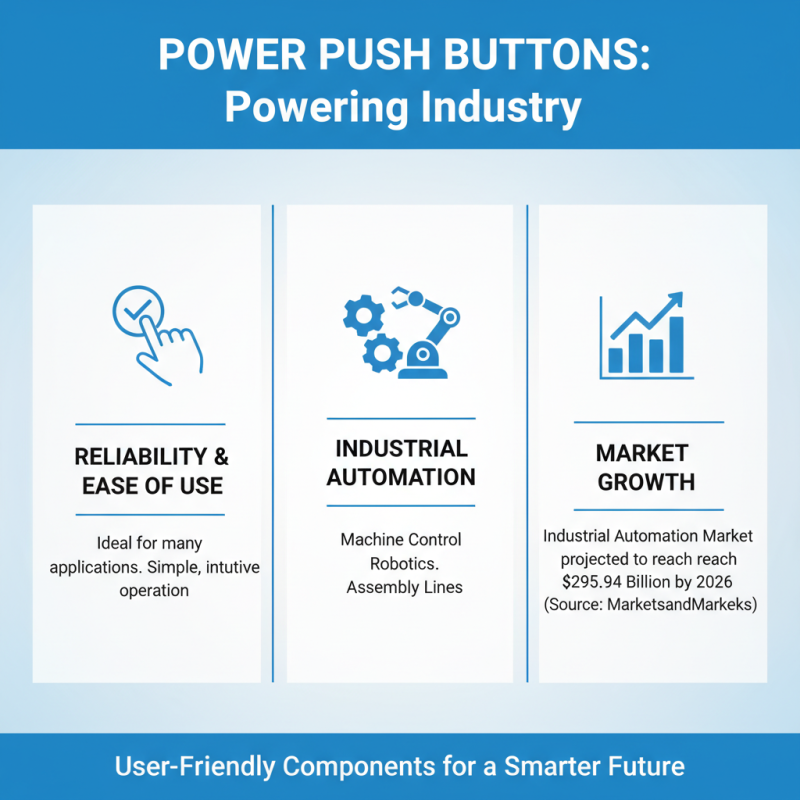
Power push buttons are widely used in various industries. Their reliability and ease of use make them ideal for many applications. The automation sector, for example, employs these buttons for machine control. In fact, a report by MarketsandMarkets projected that the industrial automation market will reach $295.94 billion by 2026. This highlights the demand for user-friendly components like power push buttons.
In healthcare, power push buttons serve crucial roles in medical devices. Emergency systems often utilize these buttons to ensure swift communication during crises. According to a study by Grand View Research, the global medical devices market is expected to reach $612.7 billion by 2025. This growth emphasizes the need for reliable buttons in life-saving equipment.
However, the design and placement of these buttons can sometimes be overlooked. For instance, if a button is not easily accessible, it may hinder quick response times. In environments like factories or hospitals, this oversight could have serious implications. Continuous assessment and improvement of their functionality are essential for safety and efficiency.
Safety Considerations for Using Power Push Buttons
Power push buttons are essential in various applications, from industrial machinery to consumer electronics. However, safety should never be overlooked. When using these buttons, there are important precautions to consider. First, ensure that the button is properly rated for the electrical load it will handle. Underestimating this can lead to overheating or failure.
Next, keep the area around the button clear. Obstructions can prevent quick access during emergencies. Consider labeling the button clearly. Users should know its function immediately. Regular maintenance is vital, too. Wear and tear can lead to malfunctions. It’s not enough to install a button; periodic checks are necessary.
Lastly, training staff on proper usage is crucial. Misunderstandings can arise, especially in high-stress situations. A simple error, like pressing the wrong button, may have serious consequences. Reflect on the safety measures in place. Are they sufficient? Adjustments may be needed to enhance overall safety.
What is a Power Push Button and How Does It Work? - Safety Considerations for Using Power Push Buttons
| Feature |
Description |
Safety Consideration |
| Operation |
Device for controlling electrical equipment; typically used to turn on/off. |
Always ensure the button is rated for the load it controls. |
| Types |
Standard push buttons, illuminated buttons, emergency stop buttons. |
Use emergency stop buttons in accessible locations to ensure quick activation. |
| Material |
Typically made from durable plastic or metal to withstand wear. |
Check for wear and tear regularly to prevent failure. |
| Installation |
Should be installed in a way that protects it from environmental hazards. |
Follow manufacturer installation guidelines to avoid electrical hazards. |
| Testing |
Regular testing ensures functionality and safety. |
Establish a routine testing schedule as part of safety protocols. |
 008613968780263

 CONTACT NUMBER
 CONTACT