Top Optical Fiber Adapter Types Explained for Your Networking Needs?
In today’s fast-paced digital landscape, understanding the role of the Optical Fiber Adapter is crucial for effective networking. According to the Global Optical Fiber Adapter Market Report, the industry is projected to grow at a CAGR of 7.5% over the next five years, indicating a rising demand for reliable networking solutions. Industry expert Dr. Jane Thompson states, “The right optical fiber adapters can significantly enhance data transmission efficiency.”
As networks evolve, the need for high-quality optical fiber adapters becomes essential. These adapters facilitate seamless connections between different fiber optic cables, minimizing signal loss and ensuring optimal performance. However, many small and mid-sized businesses overlook this critical component, often leading to inefficiencies.
Moreover, as various fiber connector types flood the market, confusion can arise. The uncertainty about which adapter fits a specific application may hinder networking goals. It's vital to align your networking needs with the right optical fiber adapter types to avoid potential pitfalls. Embracing these tools can ultimately lead to improved communication capabilities and better overall operational efficiency.
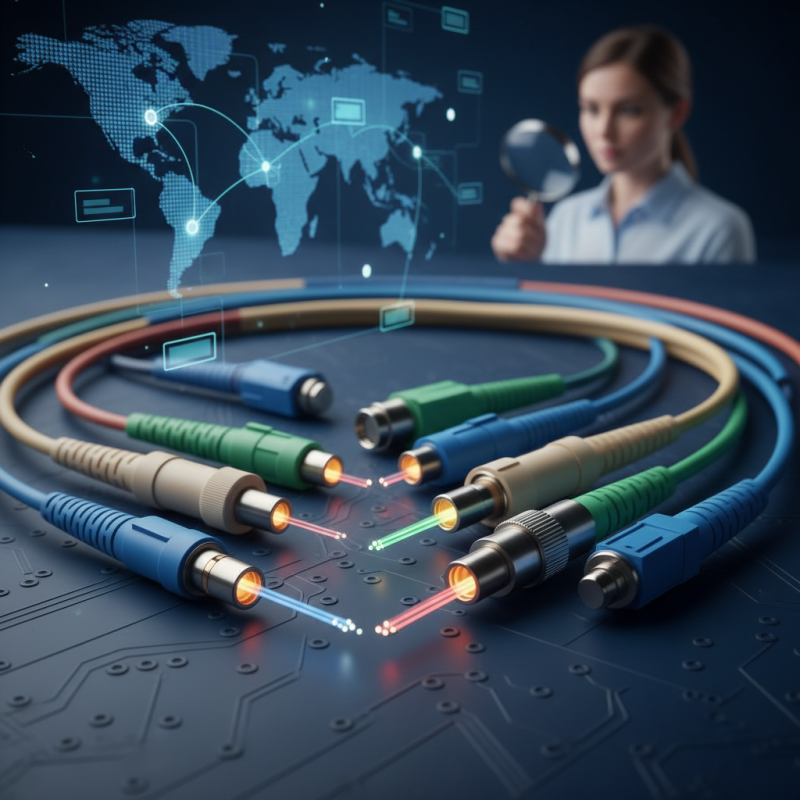
Types of Optical Fiber Adapters: An Overview
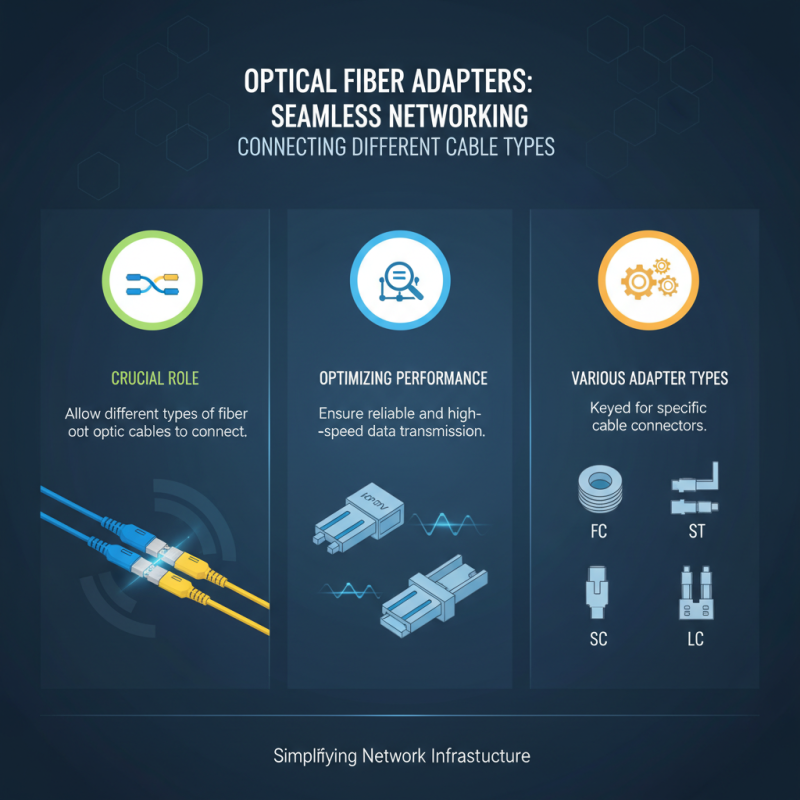
Optical fiber adapters play a crucial role in modern networking. They allow different types of fiber cables to connect seamlessly. With various adapter types available, understanding their functions is essential for optimizing network performance.
Commonly used optical fiber adapters include LC, SC, and ST types. LC adapters are known for their compact size. They are perfect for high-density applications. SC adapters, on the other hand, are larger and easier to handle. Their straightforward design makes them a popular choice for many networks. ST adapters use a bayonet-style connection, ensuring a secure fit. This type is often found in older installations.
Despite their effectiveness, adapters can sometimes introduce issues. Poor quality adapters may lead to signal loss or reflection. It’s crucial to choose quality components for better performance. Regularly testing connections can ensure optimal functioning. Users often overlook this aspect. Paying attention to these details can significantly improve networking efficiency.
Understanding the Functionality of Optical Fiber Adapters
Optical fiber adapters play a crucial role in telecommunications. They connect different fiber optic cables or devices seamlessly. Without these adapters, establishing a reliable network can be challenging. There are several types available, each with unique features.
One common type is the simplex adapter. It connects two fibers in a single direction. This makes it efficient for dedicated links. However, it might not suit bidirectional communication needs. Then there’s the duplex adapter, which allows for two fibers to operate simultaneously. This is useful in applications requiring higher data transfer rates.
Another type is the multi-fiber adapter. It can connect multiple fibers at once. This can streamline installation in larger networks. But, handling so many fibers can be tricky. Maintaining organization is essential yet hard. Users might find themselves tangled in a mess without proper management. Selecting the right adapter is vital for a well-functioning network. Mistakes made during this process can lead to performance issues. Understanding these details is key to optimizing networking needs.
Common Types of Optical Fiber Adapters in Networking
Optical fiber adapters play a crucial role in networking. They facilitate connections between different types of fibers or cables. Understanding the types available is essential for building a reliable network.
One common type is the SC adapter. This rectangular connector is often used in data centers. It provides a stable connection but can be tricky to handle. Then there’s the LC adapter. Smaller and more compact, it’s great for high-density applications. However, its size can make it easy to lose. Both types serve vital functions but come with their own challenges.
MPO adapters are another option. They allow multiple fibers to connect at once. This type can be efficient, especially in large installations. Yet, they can be overwhelming for beginners. Understanding how to use each adapter is key. With a bit of practice, you can navigate their intricacies. Remember, no single type is perfect for every situation. Explore your options and find what works best for your needs.
Application Scenarios for Various Optical Fiber Adapter Types
Understanding the application scenarios for various optical fiber adapter types is crucial for any networking setup. SC, LC, ST, and MTP are common types of adapters. Each serves unique purposes based on the network design. For instance, SC adapters are popular in data centers. They are reliable and easy to manage. Similarly, LC adapters benefit high-density environments. Their compact size allows more connections in limited spaces.
In contrast, ST adapters often find their place in legacy systems. Many still depend on ST connectors, leading to potential compatibility issues. It can be a challenge when upgrading an existing network. MTP adapters, however, support high-bandwidth applications. They excel in connecting multiple fibers quickly, but they can confuse users unfamiliar with their setup.
It is essential to choose the right adapter for your needs. Sometimes, people overlook the importance of these adapters. A wrong choice can degrade network performance. Careful consideration and understanding are necessary to avoid pitfalls. Assess your current and future networking requirements regularly. The right decisions now can save time and money later.
Considerations for Choosing the Right Optical Fiber Adapter
Optical fiber adapters play a crucial role in networking. Choosing the right one can greatly affect performance. Understanding the type you need is essential. Factors such as connectivity, type of fiber, and specific application should guide your choice.
Tips: Always check compatibility before purchasing. Different devices may require specific adapters. Research if your fibers are single-mode or multi-mode. The wrong match can lead to significant connection issues.
Consider the environment where you’ll use the adapter. Indoor and outdoor settings often demand different specifications. Weather-resistant features may be necessary for outdoor use. This detail is easy to overlook but highly influential.
Remember to assess future needs. Will you upgrade your network soon? Flexibility in adapter types can save you money. Consider investing in adapters that can evolve with your technology. Flexibility can help avoid frequent replacements and save costs down the line.
 008613968780263

 CONTACT NUMBER
 CONTACT