Leave Your Message

How to Choose the Best Pushbutton Switches for Your Needs?

Choosing the right Pushbutton Switches is more than comparing prices or selecting an attractive cap. The switch becomes the operator’s physical link to the machine. Its response, durability, and safety can influence every daily interaction.

Begin with the application, not the product photograph. A control panel in a dry workshop needs different protection from equipment exposed to dust, oil, vibration, or rain. Check the required voltage, current, switching load, contact arrangement, and electrical life. A switch rated for a signal circuit may fail quickly when used with a motor load. That mistake is common.

Fit matters too. Measure the panel cutout, body depth, terminal spacing, and actuator clearance before ordering samples. Then test the button with the actual gloves, lighting, and operating rhythm used in the field. A crisp click may feel professional, but it can become tiring after hundreds of presses. Silent operation may seem ideal, yet it can remove useful feedback.

Reliable manufacturers publish datasheets, wiring diagrams, material details, and tested ratings. Look for appropriate certifications and ingress protection claims, while confirming the exact model number. Marketing language alone is not evidence. It is worth checking.

Consider the complete service environment. Temperature, cleaning chemicals, accidental impact, and maintenance access can change the best choice. I have learned that small details, such as a loose mounting nut or unreadable legend, often create larger problems later. No selection is perfect. Careful testing exposes weaknesses before installation, when changes remain affordable. This guide explains how to compare Pushbutton Switches with practical criteria, verified specifications, and realistic expectations.
How to Choose the Best Pushbutton Switches for Your Needs?

Define Your Application and Pushbutton Switch Requirements

How to Choose the Best Pushbutton Switches for Your Needs?

Define Your Application and Pushbutton Switch Requirements

Choosing a pushbutton switch starts with the application, not the product photo. Describe what the switch must control, where it will operate, and who will use it. A control panel in a dry workshop has different needs from a machine exposed to dust, vibration, or moisture.

Record the circuit voltage and current before comparing switch types. Check whether the circuit uses AC or DC. A switch rated for one condition may perform poorly in another. Decide between momentary and maintained action. Consider the button shape, required force, travel distance, and tactile response. Operators wearing gloves may need a larger actuator. A small button can look neat but become difficult to find during an urgent task.

Physical details matter too. Measure the panel cutout, mounting depth, terminal space, and wire routing. Confirm the required protection level for the enclosure. Also check contact material, electrical life, mechanical life, and operating temperature. These specifications should match real conditions, not ideal laboratory assumptions.

A practical mistake is trusting a single rating. I have seen designs focus on current capacity while ignoring inrush current and repeated switching. That oversight can shorten service life. Review the full load profile and test a sample under realistic conditions. Documentation from a qualified manufacturer or independent test laboratory can support safer decisions, but field testing still reveals problems that specifications may miss.

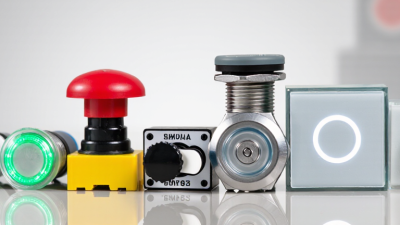
Compare Switch Types, Contact Configurations, and Operating Mechanisms

How to Choose the Best Pushbutton Switches for Your Needs?

Choosing a pushbutton switch starts with its function, not its appearance. Momentary switches return after release, while latching switches remain active. Momentary action suits machine controls and emergency reset circuits. Latching action fits power selection or mode changes. It feels simple.

Contact configuration determines circuit behavior. A normally open contact closes when pressed. A normally closed contact opens during operation. SPST handles one circuit, while SPDT transfers one circuit between two paths. For safety-related controls, verify the required contact state during power loss. IEC 60947-5-1 provides useful requirements for low-voltage control devices, including switching performance and rated characteristics. In practical panel reviews, contact ratings are often checked too late. That is a costly habit.

Operating mechanism also affects reliability. Metal or polymer actuators change feel, noise, and expected service life. Compare operating force, travel, bounce, electrical life, and mechanical life. Sealing matters in dusty or wet locations; select an enclosure rating supported by test evidence. A 2024 Grand View Research analysis estimated the global pushbutton switch market at roughly USD 2 billion, with continued growth driven by industrial automation and control equipment. The figure is useful, but market growth does not guarantee suitability. Test the actual load, especially with inductive equipment. One overlooked detail is illumination: LED voltage, heat, and viewing angle can complicate installation. The best switch is not always the most durable one; it is the one whose contacts, mechanism, environment, and operator feedback match the real task.

Evaluate Electrical Ratings, Materials, and Environmental Protection

Choosing a pushbutton switch starts with its electrical ratings, not its appearance. Check the rated voltage and current for both AC and DC circuits. DC loads can create longer arcs during contact separation. Motors, solenoids, and lamps may also draw a short inrush current. A switch rated for ten amperes resistive service may fail sooner on an inductive load. Confirm the load type, switching frequency, and expected operating life in the datasheet. Do not treat a maximum rating as a normal working target. A modest safety margin is wiser.

Materials affect reliability at the contact, actuator, and housing. Silver-based contacts often suit general power switching, while gold-plated contacts can perform better with low-level signals. The choice depends on current, oxidation, and mechanical wear. Nylon or polycarbonate housings may reduce weight, but harsh heat or chemicals can change that decision. In practical panel testing, a button can feel solid while its internal contacts deteriorate. That is easy to miss.

Environmental protection deserves equal attention. An IP rating describes resistance to dust and water under specific test conditions. It does not automatically cover oil, salt spray, ultraviolet exposure, vibration, or temperature cycling. For outdoor equipment, inspect gasket compression and cable-entry design. For washdown areas, verify the test method and installation position. A sealed switch can still fail if the mounting surface bends or the connector remains exposed. Recheck the specification at the highest expected load and temperature. Small oversights matter.

Select the Right Mounting Style, Actuation Method, and Panel Design

How to Choose the Best Pushbutton Switches for Your Needs?

Select the Right Mounting Style, Actuation Method, and Panel Design

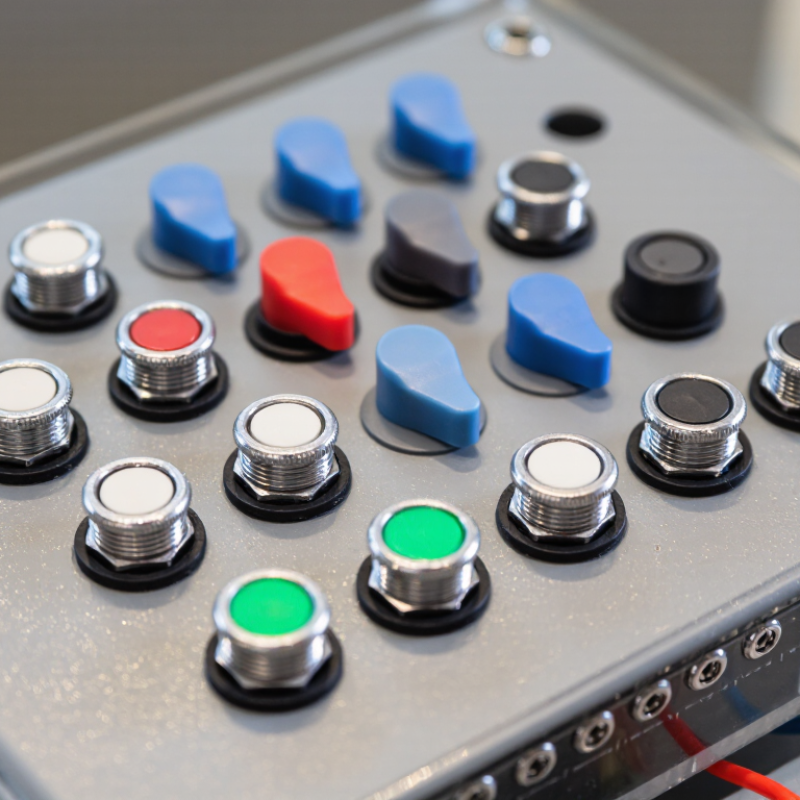
When selecting a pushbutton switch, begin with the mounting style. Panel-mount switches suit control cabinets and equipment faces. PCB-mounted versions save space but require accurate board alignment. Threaded bushings provide firm installation, while snap-in mounts speed production. Check the panel thickness before ordering. Fit matters.

Actuation should match how people use the control. Momentary switches operate only while pressed, making them suitable for jog functions or test controls. Maintained switches stay in position for power selection or mode changes. Consider travel, actuation force, and tactile feedback. Operators wearing gloves may need a larger button with stronger feedback. Do not rely on appearance alone.

Panel design affects safety and daily usability. Leave enough spacing for fingers, labels, and accidental contact prevention. Raised buttons are easier to locate, while guarded or recessed designs reduce unintended presses. Select contact ratings from the actual voltage and current, not from guesswork. I once treated a published rating as a complete answer, but the installation temperature changed the result. That shortcut was wrong. Review the datasheet, enclosure conditions, and expected operating cycles. Test the assembled panel before approving production. A switch can work perfectly on a bench and still feel awkward in use.

How to Choose the Best Pushbutton Switches for Your Needs? — Select the Right Mounting Style, Actuation Method, and Panel Design

Pushbutton Configuration Recommended Mounting Style Actuation Method Typical Contact Arrangement Typical Electrical Rating Common Panel Cutout Typical Protection Level Best-Suited Applications
Standard panel pushbutton Panel mount with threaded bushing and retaining nut Momentary, spring return Normally open (NO) or normally closed (NC) Typically 1–5 A at 125/250 VAC or low-current DC switching Approximately 12–22 mm, depending on housing design Often IP40 to IP65 when a suitable sealed version is selected Control panels, instruments, laboratory equipment, and general-purpose machinery
Illuminated pushbutton Panel mount with front bezel and rear terminals Momentary or maintained action NO, NC, or changeover contact configuration Switch contacts commonly rated up to several amperes; lamp circuit usually low-voltage DC or AC Approximately 16–30 mm Typically IP40 to IP67, depending on bezel and sealing construction Status indication, operator interfaces, machine controls, and low-light environments
Emergency-stop pushbutton Panel mount with a prominent bezel, twist release, or pull release Latching action with manual reset Usually positive-opening NC contacts, often with auxiliary NO contacts Commonly rated for control circuits; exact rating must match the safety-system design Typically 22–30 mm Frequently IP65 or higher at the front when correctly installed Industrial machinery and systems requiring rapid manual shutdown
Key-operated pushbutton Panel mount with keyed bezel and locking nut Momentary or maintained action controlled by key rotation or depression NO, NC, or changeover contacts Typically 1–5 A at common AC control voltages; verify the selected contact block Approximately 19–22 mm Often IP40 to IP65 at the panel front Restricted-access controls, enable functions, cabinets, and public-facing equipment
Anti-vandal metal pushbutton Flush panel mount with threaded metal body Momentary or latching action NO, NC, or changeover contacts Commonly 2–5 A at 125/250 VAC; low-current versions are also available Approximately 16–30 mm Often IP65 or IP67 at the front with a sealed actuator Outdoor panels, kiosks, access equipment, public interfaces, and harsh-use controls
PCB tactile pushbutton Through-hole or surface-mount PCB installation Momentary tactile actuation Usually normally open (NO) Typically suitable for low-voltage, low-current signal circuits No panel cutout; actuator height and PCB footprint determine the interface Usually not sealed unless a dedicated sealed part is selected Consumer electronics, control boards, test equipment, and compact instruments
Foot or hand-operated heavy-duty switch Surface mount or guarded enclosure mount Momentary, high-force actuation with spring return NO, NC, or changeover contacts Often rated for control and signaling circuits; power switching requires an appropriately rated contactor or relay Varies by enclosure; generally no standard panel cutout Commonly IP54 to IP67, depending on the housing Assembly stations, machine tools, service controls, and applications requiring hands-free operation
Selection note: Electrical ratings, ingress protection, panel cutout dimensions, contact materials, and safety approvals vary by construction. Always verify the manufacturer’s datasheet and applicable installation standards before final selection.

Verify Safety Standards, Durability, Compatibility, and Total Cost

How to Choose the Best Pushbutton Switches for Your Needs?

Verify Safety Standards, Durability, Compatibility, and Total Cost

Safety verification should begin with the switch’s intended environment. Check applicable national or international standards, certification records, insulation ratings, and current limits. A printed approval mark is not enough. Request traceable documentation and confirm it matches the exact model. In control panels, a poorly rated switch can overheat near tightly packed terminals. That detail is easy to miss.

Durability depends on more than the advertised operation count. Examine the actuator material, contact construction, sealing level, vibration resistance, and operating temperature range. A switch used beside wash-down equipment needs stronger protection than one installed inside a dry cabinet. Test the button with gloves if operators wear them. Small differences matter. Still, laboratory ratings may not reflect dust, misalignment, or hurried maintenance. That deserves honest review.

Compatibility covers electrical and mechanical fit. Compare voltage, current, circuit type, panel thickness, mounting diameter, terminal style, and required contact configuration. Confirm whether the switch works with relays, controllers, or safety circuits. A fitting that feels tight today may loosen after repeated vibration. Total cost includes purchase price, installation time, spare parts, downtime, and replacement labor. The cheapest option can become expensive after one failure. However, selecting the most expensive model without evidence is also poor engineering. Record test results, supplier documentation, and maintenance assumptions before approving the final choice.

How to Choose the Best Pushbutton Switches for Your Needs?

A practical evaluation model that prioritizes safety verification, durability, electrical compatibility, and total cost before purchase.

The chart uses a 100-point procurement weighting model: safety standards receive the highest priority, followed by durability, compatibility, and total cost. Verify applicable requirements such as IEC 60947-5-1 or IEC 61058-1, IP ratings under IEC 60529, rated voltage and current, mechanical and electrical life, mounting dimensions, and installation cost.