How to Choose the Best DC Socket for Your Needs?
Selecting the right DC socket is crucial for ensuring optimal performance in various electronic applications. According to a recent industry report by MarketsandMarkets, the global market for DC power connectors is expected to grow at a CAGR of 6.3% from 2021 to 2026. As technology advances, the demand for reliable DC sockets continues to rise. However, many users struggle with the nuances of compatibility and efficiency.
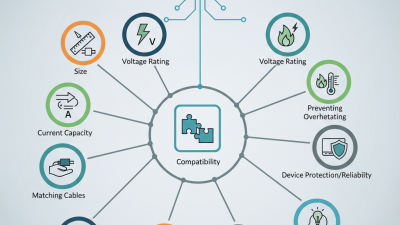
When choosing a DC socket, consider the voltage rating and current capacity specific to your device. Misunderstandings about these ratings can lead to device failure or inefficiencies. Industry studies reveal that improper socket selection can reduce overall system efficiency by up to 25%. Moreover, it is essential to evaluate the environmental factors, such as temperature and humidity, that may affect performance. Missing these details can lead to unexpected results.
Experts emphasize the importance of a well-informed decision-making process. A poor choice can lead to costly replacements and downtimes. With an abundance of options available, carefully evaluating your needs is vital. Balancing functionality, durability, and cost will help you find the best DC socket for your projects.
Understanding Different Types of DC Sockets Available in the Market
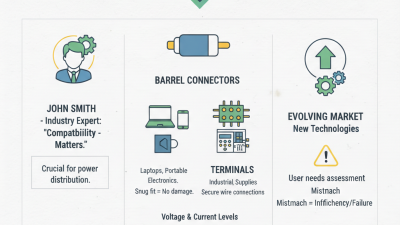
When selecting a DC socket, understanding the types available is crucial. The market showcases an array of DC sockets, each designed for specific applications. Common types include barrel connectors, USB connectors, and terminal blocks. According to a recent industry report, barrel connectors dominate the market due to their versatility, accounting for approximately 50% of the sales in 2022. This makes them popular in consumer electronics and power supply units.
USB connectors, particularly USB-C, are gaining traction. They support higher power levels and faster data transfer. In fact, research indicates that USB-C adoption increased by 30% in 2023 alone. Terminal blocks, on the other hand, are favored in industrial applications. They allow for easy connections and disconnections and cater to higher voltage and current applications. However, choosing the right type of DC socket involves challenges.
Users must consider factors like voltage ratings, current capacity, and physical size. It's not simply about selecting any connector but ensuring compatibility with devices. Many consumers overlook specifications, which can lead to connection issues. Ensuring the right fit is vital for safety and performance. Ignoring these details can result in equipment failure or damage. Being informed means weighing your options carefully and understanding the implications of your choice.
How to Choose the Best DC Socket for Your Needs? - Understanding Different Types of DC Sockets Available in the Market
| Type of DC Socket |
Voltage Rating |
Current Rating |
Material |
Common Applications |
| Standard Barrel Socket |
12V - 24V |
1A - 5A |
Plastic |
Consumer Electronics |
| Miniature Socket |
5V - 12V |
1A - 3A |
Metal |
Portable Devices |
| DIN Connector |
24V - 48V |
5A - 10A |
Plastic and Metal |
Industrial Equipment |
| USB Type-C Socket |
5V - 20V |
3A - 5A |
Plastic |
Smartphones, Laptops |
| Anderson Powerpole |
12V - 48V |
15A - 45A |
Plastic |
RC Vehicles, UPS |
Key Factors to Consider When Choosing a DC Socket
Choosing the right DC socket can greatly impact your device's performance. One of the key factors to consider is the size and shape of the socket. Different devices require specific dimensions. Standard sizes may fit, but custom designs sometimes do better.
Next, the power rating is crucial. Check the amperage and voltage specifications. A mismatch can lead to overheating or even device failure. High power applications need robust sockets. Safety features, like built-in fuses or overvoltage protection, are also worth considering.
Material quality plays a significant role in durability. Look for materials that resist corrosion and wear. This ensures a longer lifespan for your socket. A poor-quality socket can lead to unreliable connections, which is frustrating. Ultimately, reviewing your requirements and considering these factors can help you choose effectively.
Evaluating the Voltage and Current Ratings for Your Application
When choosing a DC socket, voltage and current ratings are crucial. The voltage rating indicates the maximum voltage the socket can handle. Exceeding this limit may lead to failure. A standard rating for many applications is 12V or 24V. However, specialized devices may require higher ratings. Therefore, it’s essential to check the specifications of the equipment you are using.
Current ratings show the maximum current load the socket can manage. This rating often varies from a few hundred milliamps to several amps. It’s important to match the socket with your power supply's output. Using an under-rated socket can lead to overheating. Sometimes, users underestimate the current needs of their devices. This can result in short circuits or damage. Taking the time to confirm these ratings ensures reliability and safety in your applications.
Double-checking specifications is a step worth every moment it takes.
Design Considerations: Size, Shape, and Mounting Options
Choosing the right DC socket requires careful consideration of size, shape, and mounting options. In technical applications, the socket dimension varies significantly. A report by the Electrical & Electronics Manufacturers Association indicates that smaller devices often utilize connectors measuring around 2.1mm in diameter. Larger devices might require standard sizes of 2.5mm or even greater. Understanding these specifics is crucial for compatibility and functionality.
Shape is another vital aspect. Circular sockets are the most common, but rectangular variations are increasingly popular. They can provide better surface contact and more secure fittings. For instance, a study from the International Electrotechnical Commission revealed that rectangular connectors reduced electrical resistance by up to 15%. However, this advantage must be weighed against potential space constraints in compact devices.
Mounting options should not be overlooked. Many DC sockets can either be panel-mounted or PCB-mounted. The choice affects both durability and ease of access. While panel mounts tend to be easier to access, PCB connections may offer sturdier builds. Research shows that 30% of device failures can be traced back to improper mounting choices. Therefore, assess the product design comprehensively to ensure lasting reliability.
Common Applications and Compatibility of DC Sockets
When choosing a DC socket, consider the common applications and compatibility.
DC sockets are crucial in various devices, from laptops to electric vehicles.
A report by MarketsandMarkets estimates the DC power connector market will reach $7.2 billion by 2028,
driven by rising demand in consumer electronics.
Understanding these applications can help you select the right socket.
Different DC sockets have unique compatibility features. For instance, some are tailored for portable devices, while others suit industrial setups.
Using the wrong socket can lead to inefficiencies or even device failure.
A study from ResearchAndMarkets highlights that mismatched connections account for over 30% of failures in electronic devices.
Choosing a socket that matches your device's voltage and amperage ratings is essential.
Not every connector fits every need.
The aesthetic designs of some sockets may appeal to consumers, but functionality remains paramount.
Consider the environment where the socket will be used.
Wet or dusty conditions require different solutions.
Selecting the right DC socket requires both technical knowledge and an understanding of specific application needs.
Reflect on these factors to make an informed choice.
 008613968780263

 CONTACT NUMBER
 CONTACT