008613968780263


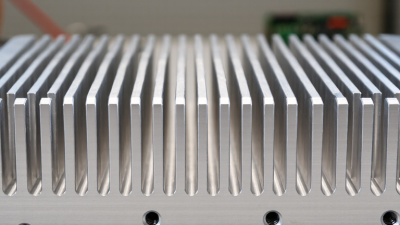
An Aluminum Heat Sink can look simple: a metal base, narrow fins, and mounting holes. Yet small design choices affect thermal performance, weight, cost, and assembly. For global buyers, comparing Chinese manufacturers means looking beyond catalogue photos. Alloy grade, extrusion tolerances, surface finish, machining capacity, and inspection records all matter. A fin that is slightly warped can complicate contact with a processor or power module.
The International Energy Agency’s Electricity 2024 report estimates that data centres used about 460 terawatt-hours of electricity in 2022. It projects demand could exceed 1,000 terawatt-hours by 2026. This is not a heat-sink sales forecast. It does, however, show why reliable thermal design matters as digital infrastructure expands. Heat-transfer scholar Yunus A. Çengel describes the underlying principle: “Heat transfer is the science that seeks to predict the energy transfer that may take place between material bodies as a result of a temperature difference.”
For procurement teams, the right supplier must turn that principle into repeatable production. Ask for drawings, material certificates, sample measurements, and clear answers about production lead times. Compare prototype support and communication, too. A polished website is not proof of consistent quality. No shortlist is perfect. Even a capable factory may not suit every volume, tolerance, or delivery schedule.
This guide introduces ten Chinese manufacturers for international buyers to assess. It is a starting point, not a substitute for testing samples against your own thermal and mechanical requirements.
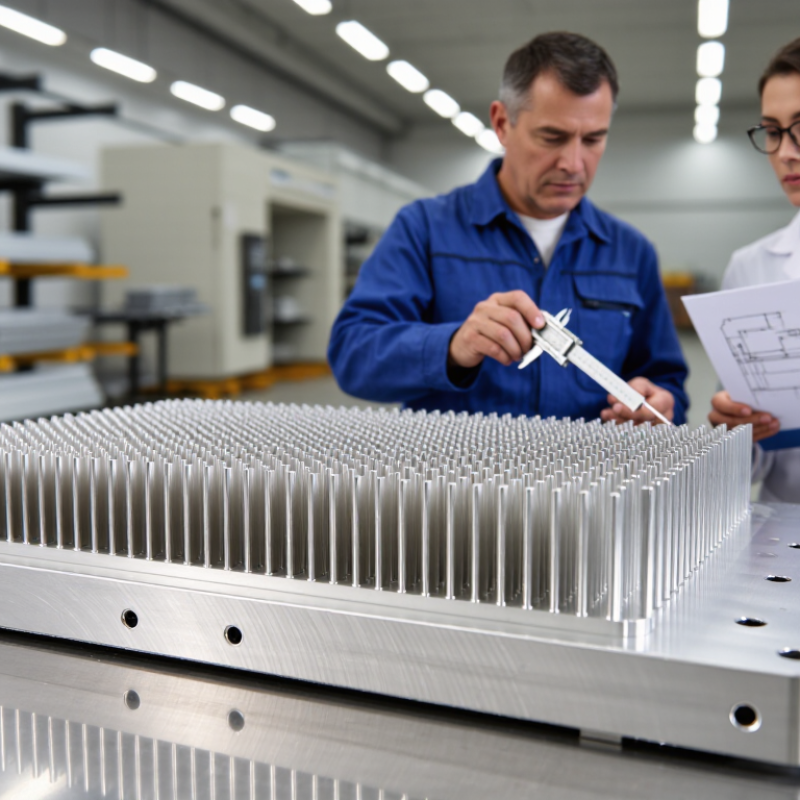
An aluminum heat sink moves heat away from a component and releases it into surrounding air. Its base contacts the heat source, often through a thin thermal interface material, while fins increase the surface area exposed to airflow. Aluminum is widely used because it is relatively light, easy to shape, and conducts heat effectively. Yet more fins do not automatically mean better cooling. Closely spaced fins can restrict airflow, especially in a compact enclosure with a small fan. The details matter.
These properties make aluminum heat sinks useful in power supplies, LED lighting, telecommunications equipment, industrial controls, and computing hardware. In each case, engineers consider heat output, available space, airflow, and operating conditions. The IEA’s Electricity 2024 report estimates that data centers could use around 1,000 TWh of electricity globally in 2026. That figure does not measure heat-sink demand, but it highlights the growing importance of managing heat in computing systems. A heat sink alone may not solve a thermal problem; poor contact or blocked vents can undermine a sound design. It is easy to overlook those basics. Testing under real operating conditions remains essential, and a design that works on paper may still need adjustment.
Start with engineering evidence, not catalog claims. Ask for the alloy and temper, extrusion or casting method, dimensional tolerances, and a drawing tied to the quoted part.
The Lawrence Berkeley National Laboratory’s 2024 United States Data Center Energy Usage Report estimates that data centers used 176 TWh of electricity in 2023, with demand potentially reaching 325–580 TWh by 2028.
This is not a heat-sink market forecast, but it shows why thermal performance deserves careful review. Numbers need context. Request thermal-resistance curves that state power, airflow, orientation, and ambient temperature. Compare suppliers only under matching test conditions.
Then check whether production can repeat the sample. Request inspection records for fin spacing, base flatness, surface finish, and critical mounting dimensions. Ask how the factory controls tool wear and tracks material batches.
A polished prototype proves little. Request a sample from a normal production run, then test it against your own design limits. Ask for raw test data, not only a pass certificate. A quality certificate can support an assessment, but it cannot replace process evidence.
I would not treat a tidy document pack as proof of consistent output; that assumption is easy to make, and worth challenging. Finally, confirm lead times, packaging protection, and how the supplier handles engineering changes.
A useful profile of ten Chinese aluminum heat sink manufacturers should compare production capability, not just catalog breadth.
The International Aluminium Institute’s 2023 production data records about 41.5 million tonnes of primary aluminum output in China, roughly 59% of the global total. That scale supports a broad supplier base, but it does not guarantee tight tolerances or consistent thermal performance.
Buyers should check alloy specifications, extrusion dimensions, machining capacity, and inspection records.
The strongest profiles distinguish manufacturers by process. Extruded 6063 parts suit long fins and repeatable sections; die-cast designs can accommodate more complex shapes.
Ask for fin-pitch measurements, flatness results, coating details, and thermal test conditions. Specifics matter.
A temperature figure without airflow, power load, and test setup is hard to compare. Also review sample lead times and packaging: bent fins can undermine an otherwise sound design.
These checks are not glamorous, and procurement teams sometimes overlook them. A supplier’s production scale is only one clue; verified process control and clear test data make the profile useful.
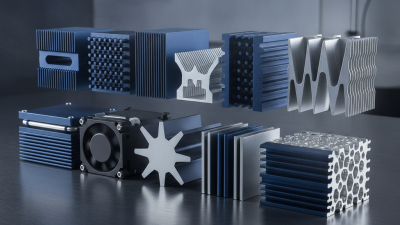
Aluminum heat sinks vary widely, even when their external shapes look similar. Compare extrusion, die-casting, and CNC-machined options against the required thermal load, available space, and operating environment. Ask for material grades, dimensional tolerances, and test conditions. A thermal result without test details is hard to compare.
Production capability matters as much as design. Review monthly output, tooling capacity, machining steps, and inspection methods. For example, a supplier making consistent fin spacing across several thousand units may suit a different project than one specializing in short custom runs. Request samples and inspect fin edges, mounting holes, and surface finish. One caveat: stated capacity can be optimistic.
Certifications help assess management systems, but their scope needs checking. Confirm that certificates are current and cover the relevant production site and processes. ISO 9001 may indicate a quality-management system; it does not prove that a heat sink meets your thermal target. Ask for inspection records, material documentation, and performance data from comparable parts. A neat spreadsheet can still mislead. Leave room for uncertainty, especially when specifications or test conditions differ.
Global buyers should assess aluminum heat sink manufacturers against the application, not just the quoted price. Define the alloy, dimensions, surface treatment, thermal load, and annual volume before requesting offers. Share a drawing with tolerance requirements and identify any critical mounting surfaces. Clarity helps.
Ask how the supplier controls extrusion or machining, inspection, and packaging. Request sample inspection records and material documentation for the proposed production route. A prototype can reveal fit problems, but test it under realistic airflow and operating conditions. Check fin spacing, flatness, and contact surfaces with suitable measuring tools. These details affect assembly and heat transfer.
Compare lead times, minimum order quantities, tooling charges, and payment terms in writing. Ask how defects are handled and whether production changes require approval. A video call can show equipment and quality checks, though it cannot replace an independent assessment. Even a careful audit misses things. My own sourcing reviews have sometimes focused too heavily on certificates; practical sample results deserved more attention. The lowest quote may exclude packaging or inspection, so clarify what each price includes.
| No. | Evaluation Dimension | What to Verify | Evidence to Request | Why It Matters to Global Buyers |
|---|---|---|---|---|
| 1 | Manufacturing Process Fit | Confirm whether the supplier can produce the required design using extrusion, die casting, CNC machining, skiving, stamping, or a suitable combination of processes. | Process flow, equipment list, sample parts, and a written explanation of process limitations. | The process affects achievable geometry, production volume, tooling needs, surface finish, and unit cost. |
| 2 | Aluminum Alloy and Material Traceability | Check the proposed alloy and temper against the design requirements. Common heat-sink alloys include 6063 and 6061 for extrusions and ADC12 or A380 for die-cast parts; suitability depends on the application. | Material specification, mill test certificate or equivalent material documentation, and lot-traceability procedure. | Alloy choice influences thermal conductivity, strength, corrosion behavior, formability, and compatibility with the selected process. |
| 3 | Thermal Design and Validation | Ask how the supplier evaluates the heat sink in the intended operating conditions, including heat load, airflow, orientation, ambient temperature, and interface conditions. | Thermal test method, test setup, measured results, and—where used—simulation assumptions and validation records. | A heat sink’s performance depends on the complete application and airflow, not only on its size or fin count. |
| 4 | Dimensional and Process Quality | Review control of critical dimensions, flatness, fin spacing, mounting features, and any drawing-specific tolerances. | Inspection plan, sample measurement report, calibrated-equipment records, and nonconformance procedure. | Consistent dimensions support assembly fit, interface contact, repeatable thermal performance, and reliable downstream production. |
| 5 | Quality Management System | Verify the scope and validity of the supplier’s quality certifications. ISO 9001 is a general quality-management standard; IATF 16949 is relevant to automotive supply chains when required by the customer. | Current certificates, certification scope, audit results where available, and corrective-action examples. | A documented quality system helps buyers assess whether processes, records, and corrective actions are managed consistently. |
| 6 | Surface Treatment and Corrosion Requirements | Specify whether the part needs anodizing, powder coating, conversion coating, or no finish, and confirm color, appearance, masking, and performance requirements. | Finish specification, approved samples, process-control records, and applicable test reports. | Finishes can affect appearance, corrosion resistance, electrical contact, emissivity, and thermal-interface areas. |
| 7 | Regulatory and Substance Documentation | Identify destination-market requirements and request documentation relevant to the product and its materials. RoHS and REACH obligations depend on the product, market, and applicable rules. | Supplier declarations, material declarations, and test reports where appropriate to the buyer’s compliance program. | Early documentation checks can reduce customs, customer-approval, and product-compliance delays. |
| 8 | Capacity, Tooling, and Production Planning | Confirm available capacity, tooling ownership and maintenance, production scheduling, and the supplier’s process for handling demand changes. | Capacity statement, tooling agreement, production plan, and written confirmation of the quoted minimum order quantity and lead time. | Capacity and tooling arrangements affect launch timing, continuity of supply, and the buyer’s control of dedicated production assets. |
| 9 | Packaging, Shipping, and Export Readiness | Agree on packaging that protects fins and finished surfaces, shipping marks, carton or pallet requirements, and delivery terms before production approval. | Packaging specification, packing photos or samples, export-document checklist, and quotation with clearly stated Incoterms. | Suitable packaging and clear shipping responsibilities help prevent transit damage and misunderstandings about delivery costs or risk. |
| 10 | Communication and Commercial Transparency | Assess response quality, drawing-change control, quotation detail, payment terms, warranty terms, and the process for managing disputes or corrective actions. | Itemized quotation, approved drawing revision, change-control procedure, sample-approval plan, and written commercial terms. | Clear records and communication reduce specification gaps and make supplier performance easier to manage over the life of the project. |